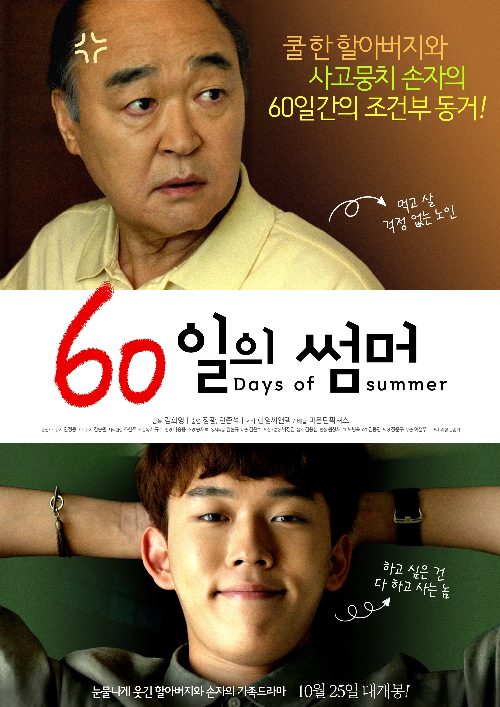
About 60 Days of Summer
An old man has trouble connecting with his young grandson that recently moved in. But then there are a series of mysterious attacks on the elderly, and the grandpa-grandson duo decide to investigate together and bond over the experience.
The quiet tension of generational divides often serves as a potent catalyst for suspense, and 60 Days of Summer masterfully exploits this dynamic to craft a compelling mystery. Directed by Kim Hee-young, this 2018 Korean feature moves beyond the typical tropes of familial drama, instead embedding a poignant exploration of aging and alienation within a taut investigation. The narrative centers on a grandfather and his grandson who find themselves living under the same roof despite having almost nothing in common. Their initial struggle to communicate is interrupted by a disturbing pattern of violence targeting the elderly population in their vicinity, forcing the mismatched pair to align their efforts.
Within the landscape of South Korean cinema, which has long excelled at blending social commentary with genre thrills, this film stands out for its intimate scale. While many regional blockbusters favor high-octane action or elaborate political conspiracies, Kim Hee-young opts for a grounded approach that emphasizes the psychological weight of the characters. The casting of veteran actor Jang Kwang provides a sturdy anchor for the production, grounding the more suspenseful elements in a reality that feels deeply lived-in and authentic. The film thrives on the friction between the wisdom of the past and the digital-age cynicism of the youth, suggesting that the most effective way to bridge a gap between strangers is through a shared, high-stakes objective.
Viewers who appreciate slow-burn thrillers that prioritize character development over flashy spectacle will likely find this project particularly rewarding. It is a film for those who enjoy the investigative pacing of neo-noir but prefer the emotional stakes of a domestic drama. By focusing on the vulnerability of the elderly and the isolation often felt by the younger generation, the story elevates itself from a standard whodunit into a meaningful meditation on the ties that bind family members together. The film does not merely rely on the mystery of the perpetrator to keep the audience engaged, but rather on the evolving partnership between the leads. As the investigation progresses, the shifting power dynamics and the gradual thawing of their relationship provide the emotional heartbeat of the story. It is a testament to the versatility of Korean independent filmmaking that such a small-scale premise can feel both urgent and profoundly human, offering a unique perspective on the challenges of connection in a rapidly changing society.