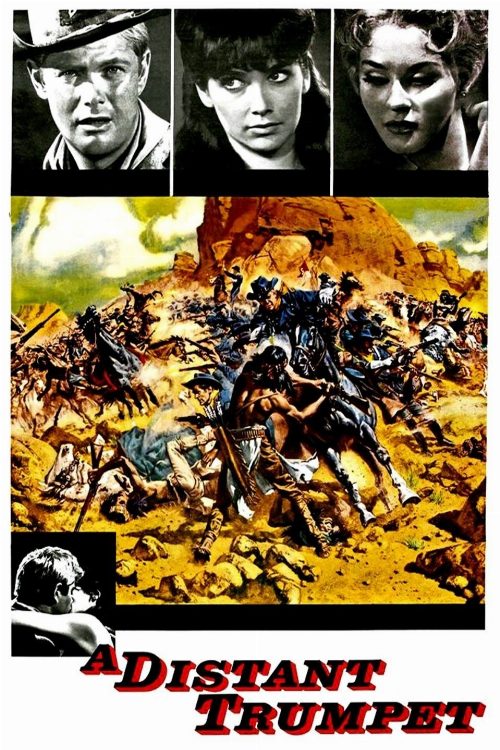
About A Distant Trumpet
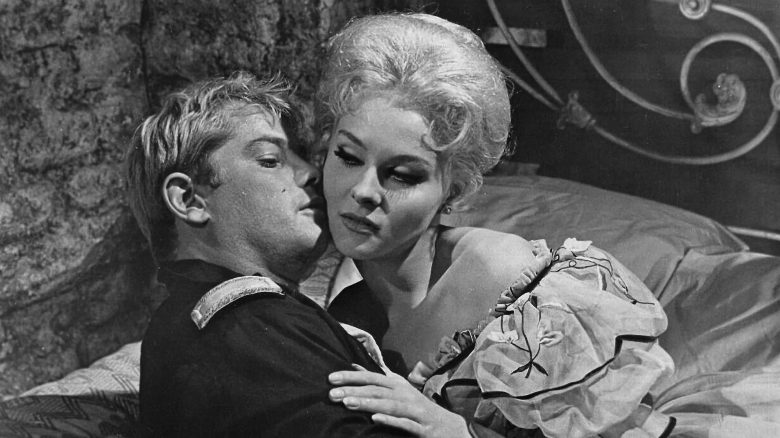
In 1883, US Cavalry lieutenant Matthew Hazard, newly graduated from West Point, is assigned to isolated Fort Delivery on the Mexican border of Arizona, where he meets commanding officer Teddy Mainwarring's wife Kitty, whom he later rescues from an Indian attack.
Raoul Walsh spent his storied career defining the visual language of the American frontier, and A Distant Trumpet serves as a late-period testament to his mastery of the genre. Set against the harsh, sun-drenched backdrop of the Arizona territory during the 1880s, the film captures a pivotal moment of transition for a fresh West Point graduate, Matthew Hazard, who finds himself stationed at a desolate outpost. While the narrative framework leans into the classic cavalry versus indigenous conflict tropes that dominated mid-century Westerns, the film distinguishes itself by focusing on the friction between rigid military protocol and the unpredictable, unforgiving reality of the borderlands. It captures the transition of the West from an untamed wilderness into a structured territory, reflecting a broader cinematic preoccupation with the cost of expansionism and the isolation of those tasked with enforcing it.
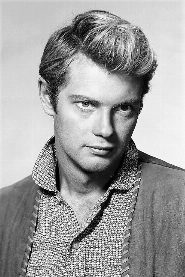
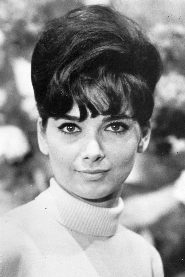
The film serves as a compelling study for enthusiasts of vintage Hollywood who enjoy character-driven dramas framed by sweeping landscapes. Troy Donahue brings a specific period charm to the role of the idealistic officer, playing well against the established screen presence of Suzanne Pleshette. Their dynamic, complicated by the presence of the commanding officer, adds a layer of romantic tension that grounds the larger political stakes of the story. For viewers familiar with the evolution of Indian cinema, there is a fascinating parallel here to the way regional industries often utilize historical settings to explore themes of duty, personal integrity, and the clash between traditional authority and individual conscience. Just as many contemporary Telugu or Hindi epics use historical backdrops to examine modern identity, this film uses its 19th-century setting to interrogate the ethics of command.
Audiences who appreciate the meticulous pacing of classic studio-era productions will find much to admire in the film’s technical execution. Walsh, a director who understood how to harness the scale of the environment to heighten personal drama, ensures that the desert itself acts as a third participant in the story. It is a film that rewards viewers who value traditional storytelling, offering a window into a bygone era of moviemaking where the moral weight of a decision was often conveyed through a single look or a quiet exchange in a dusty courtyard. Whether you are a dedicated fan of Westerns or a scholar of global film history interested in how Hollywood shaped the archetype of the frontier hero, this production remains a notable inclusion in the canon, providing a clear look at how the genre transitioned from the myth-making of the early days to the more complex, introspective stories of the late sixties.
Cast(14)