

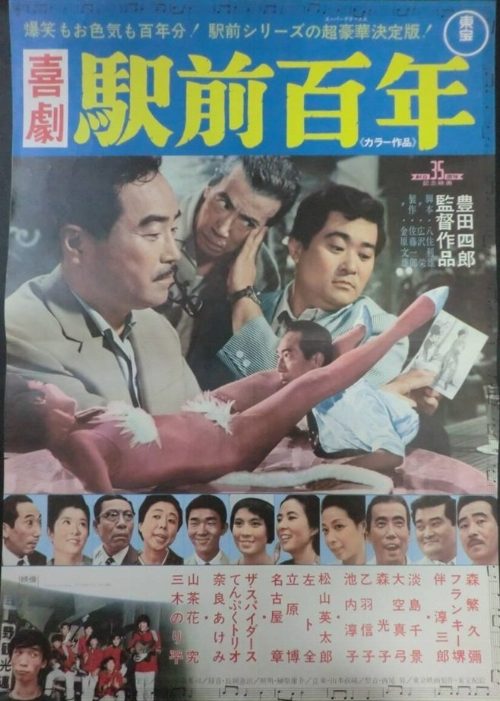
A Hundred-Years' Comedy in Front of the Station(1967)
About A Hundred-Years' Comedy in Front of the Station
The 21st film in the Ekimae series, commemorating the 35th anniversary of Toho. The film is a loose remake of the first film in the series, Ekimae Ryoukan.
Stepping into the vibrant, chaotic world of Shiro Toyoda’s A Hundred-Years Comedy in Front of the Station offers a fascinating window into the mid-century Japanese studio system. As the twenty-first installment in the enduring Ekimae franchise, this 1967 production serves as a nostalgic bridge to the series origins, arriving as a celebratory milestone for Toho during its thirty-fifth anniversary. While contemporary audiences often associate Japanese cinema of this era with the contemplative gravity of masters like Kurosawa or Ozu, this film highlights the sheer commercial vitality and rhythmic wit that defined the popular entertainment landscape. It captures a specific flavor of domestic humor, anchored by a troupe of performers whose chemistry had been refined over years of recurring roles, effectively creating a comfortable, lived-in atmosphere that mirrors the ensemble-driven long-running sagas we see today in various regional Indian film industries.
The narrative functions as a spirited revisit of the foundational themes that first launched this long-running cycle, focusing on the frantic energy of daily life centered around a local station. For those who appreciate the ensemble comedy tropes prevalent in classic Tamil or Malayalam cinema, where local businesses and neighborhood personalities collide to create farcical tension, this film will feel remarkably familiar. It utilizes a rotating cast of industry stalwarts, including Junzaburo Ban and Nobuko Otowa, who masterfully navigate the thin line between slapstick and character-driven charm. Toyoda, a director known for his adaptability across genres, keeps the pacing brisk, ensuring that the interplay between the colorful inhabitants of the station district remains the primary draw. The film succeeds because it leans into the art of the archetype, allowing the audience to feel as though they are visiting old friends rather than watching strangers navigate a plot.
This project is essential viewing for students of international cinema history who want to move beyond the traditional canon and explore the populist roots of the Showa era. It is positioned as a sentimental journey for those who crave the comfort of a bygone era of studio filmmaking, where the focus was less on reinventing the medium and more on perfecting the delivery of a reliable, high-quality comedic experience. By reflecting the social shifts of 1960s Japan through the lens of a familiar, recurring premise, the film provides a unique perspective on how a major studio maintained audience loyalty for decades. It stands as a testament to the power of a well-oiled creative machine, proving that sometimes the most enduring cinematic legacy is found not in grand ambition, but in the polished, repeatable joy of a well-told story.



