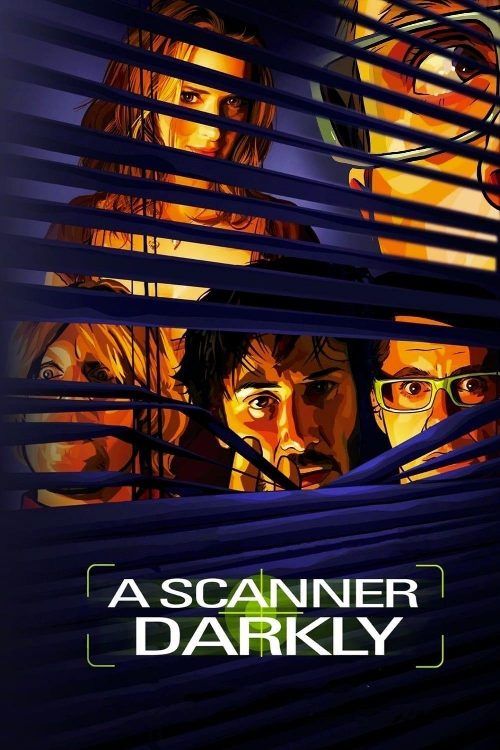
About A Scanner Darkly
An undercover cop in a not-too-distant future becomes involved with a dangerous new drug and begins to lose his own identity as a result.
Richard Linklater remains one of the most intellectually restless filmmakers of his generation, and A Scanner Darkly serves as perhaps his most visually inventive investigation into the fragility of the human psyche. By utilizing rotoscoped animation, a technique that paints over live action to create a surreal, dreamlike aesthetic, the film captures the paranoid disintegration of a society hooked on a reality-bending substance. While the narrative is rooted in the gritty science fiction tradition of Philip K. Dick, it resonates with a haunting intimacy that feels far removed from typical big-budget futuristic epics. The story follows an officer tasked with infiltrating a subculture of users, only to find his own perceptions fracturing as the line between his duty and his addiction blurs into an unrecognizable haze.
For fans of Indian cinema who appreciate the psychological depth found in modern thrillers like those emerging from the Malayalam industry, this film offers a similar sense of atmospheric dread. It mirrors the current global fascination with high-concept storytelling where technology and identity collide, a theme frequently explored in contemporary Telugu or Tamil experimental dramas. Keanu Reeves anchors the film with a performance that is profoundly understated, conveying the quiet terror of a man who can no longer trust his own eyes or his fractured memories. His presence, coupled with the contributions of Winona Ryder, elevates the material beyond mere genre exercise, grounding the psychedelic visuals in genuine human sorrow.
This feature is best suited for viewers who prefer cerebral puzzles over explosive action sequences. It demands a level of patient engagement, asking the audience to navigate a web of surveillance and betrayal alongside the protagonist. The rotoscoped style acts as a perfect metaphor for the central premise, suggesting that what we see on the surface is rarely the full truth. By stripping away the polish of traditional filmmaking, Linklater forces a confrontation with the instability of the self. Whether you are a devotee of classic science fiction literature or a follower of independent cinema that pushes formal boundaries, the film remains a landmark achievement that continues to provoke questions about how we define our own existence in an age of constant observation and systemic deception. It stands as a testament to the idea that the most frightening frontiers are not in outer space, but within the shifting architecture of the mind itself.
Cast(30)