August: Osage County(2013)
About August: Osage County
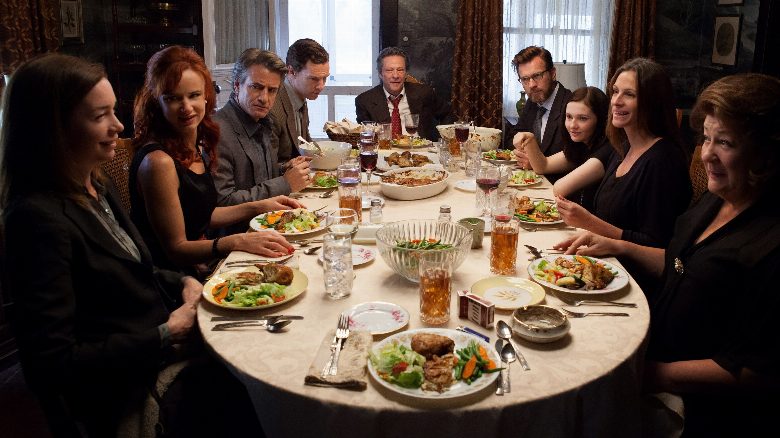
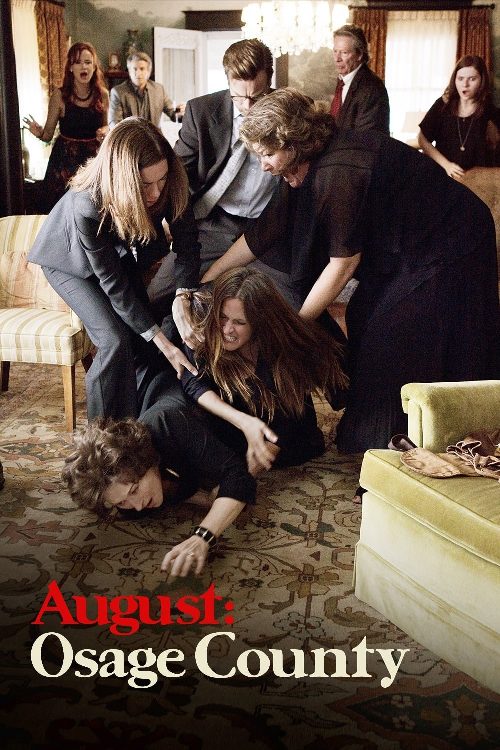
An intense look at the lives of the strong-willed daughters of the Weston family, whose paths have diverged until a family crisis brings them back to the Midwest house they grew up in, and to the dysfunctional mother who raised them.
Few cinematic experiences capture the volatile chemistry of a fractured family quite like the 2013 adaptation of August Osage County. While contemporary Indian cinema often highlights the sanctity of the joint family structure through grand, emotional spectacles, this film offers a starkly different, Western perspective on domestic legacy. It strips away the veneer of polite reunions to expose the raw, jagged edges of shared history. Centered on the volatile Weston household, the narrative thrives on the claustrophobia of a homecoming that acts more like a battlefield than a sanctuary. The story follows three sisters who are forced to return to their rural roots after a sudden disappearance, only to be confronted by the sharp tongue and biting cynicism of their matriarch.
What makes this project stand out is its relentless commitment to psychological realism, a trait that resonates with fans of intense character dramas found in the burgeoning independent circuits of Malayalam or Tamil cinema. The film functions as a masterclass in ensemble acting, where the screenplay forces every performer to navigate complex layers of resentment, suppressed guilt, and desperate affection. Meryl Streep delivers a performance that oscillates between vulnerability and tyranny, anchoring the film while Julia Roberts provides a grounded, equally fierce counterpoint. For audiences who appreciate the nuanced domestic conflicts seen in works like The Lunchbox or the gritty social portraits often explored by directors like Lijo Jose Pellissery, this film offers a similar depth of character study, albeit within a distinctively American cultural framework.
This is a quintessential viewing choice for those who prefer dialogue-heavy scripts over action-oriented spectacles. It is designed for viewers who enjoy dissecting family dynamics and the ways in which we are both shaped and scarred by our upbringing. The production values and the heavy reliance on stage-to-screen adaptation mechanics give it a theatrical weight that feels intimate yet grand in scope. By avoiding the typical tropes of sentimental reconciliation, the film remains a bracing reminder that sometimes the most difficult people to face are the ones who share our bloodline. It is a haunting, often uncomfortable, yet undeniably gripping portrait of survival within the confines of our own homes, proving that even across different global industries, the universal language of familial tension remains a powerful narrative engine.
Cast(22)