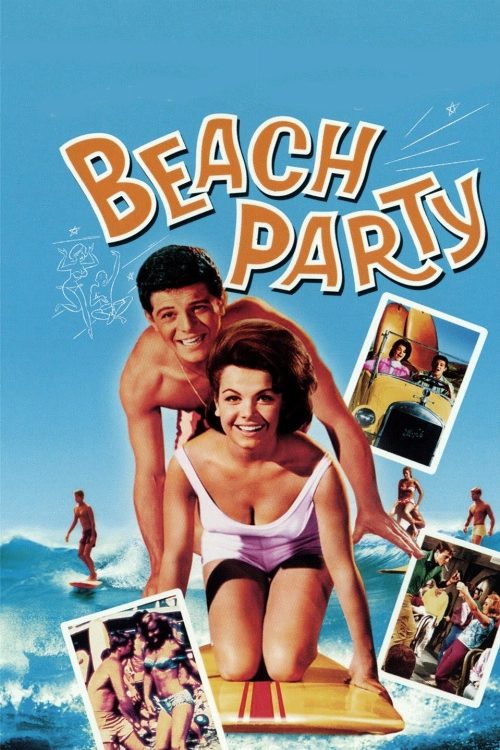
About Beach Party
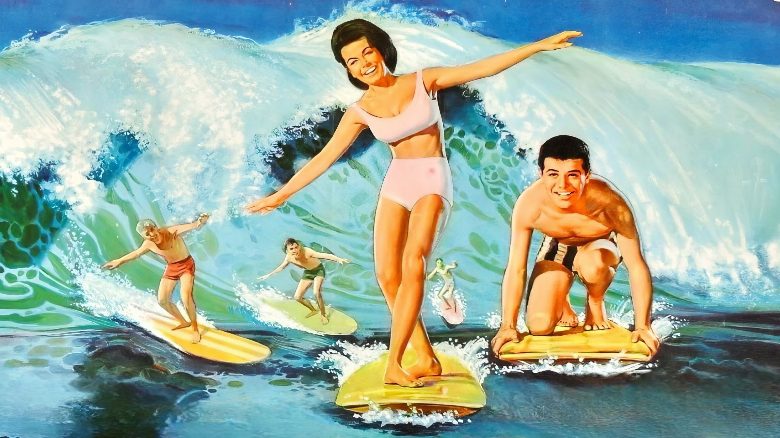
Anthropology Professor Robert Orwell Sutwell and his secretary Marianne are studying the sex habits of teenagers. The surfing teens led by Frankie and Dee Dee don't have much sex but they sing, battle the motorcycle rats and mice led by Eric Von Zipper and dance to Dick Dale and the Del Tones.
The sun-drenched aesthetic of early sixties Hollywood finds one of its most quintessential expressions in Beach Party, a film that effectively codified the surf movie craze for a generation. Departing from the grit often associated with youth rebellion stories of that era, this production leans heavily into a technicolor fantasy where the primary conflicts involve sand, surfboards, and melodic rivalries. It serves as a fascinating historical artifact for modern audiences, particularly those who appreciate how cinema captures the shifting social mores of the post-war period. By framing the narrative through the lens of an academic observer attempting to decode the supposed mysteries of teenage behavior, the film creates a playful tension between the stuffy establishment and the vibrant, carefree world of the coast.
Within the broader landscape of American cinema, this title occupies a unique space as a stylistic precursor to the energetic, ensemble-driven musical comedies that would later dominate the decade. While international viewers often look toward the evolving landscapes of contemporary Telugu or Hindi cinema for high-energy song and dance numbers, Beach Party offers a Western stylistic ancestor to that tradition. The inclusion of live musical performances by Dick Dale and the Del Tones provides a rhythmic backbone that keeps the momentum high, mirroring the way regional Indian industries utilize music to define the personality of their protagonists. It is less about a traditional plot and more about the atmosphere, capturing a specific slice of Californian coastal culture that feels frozen in time.
Viewers who enjoy lighthearted period pieces or those interested in the evolution of teen movies will find plenty to appreciate here. The film is perfectly suited for anyone looking to understand the roots of the beach-blanket genre, which prioritized leisure and aesthetic appeal over heavy-handed melodrama. It sits comfortably alongside the era’s experiments in youth-oriented storytelling, presenting a sanitized, highly stylized version of adolescence that remains visually iconic even decades later. For those who track the history of light comedy, the dynamic between the surfing crowd and the motorcycle-riding antagonists provides a classic template for the lighthearted friction that defines the genre. It is a breezy, uncomplicated watch that invites the audience to simply settle into the rhythm of the waves and the infectious spirit of a bygone era in filmmaking.
Cast(45)