About Before and After
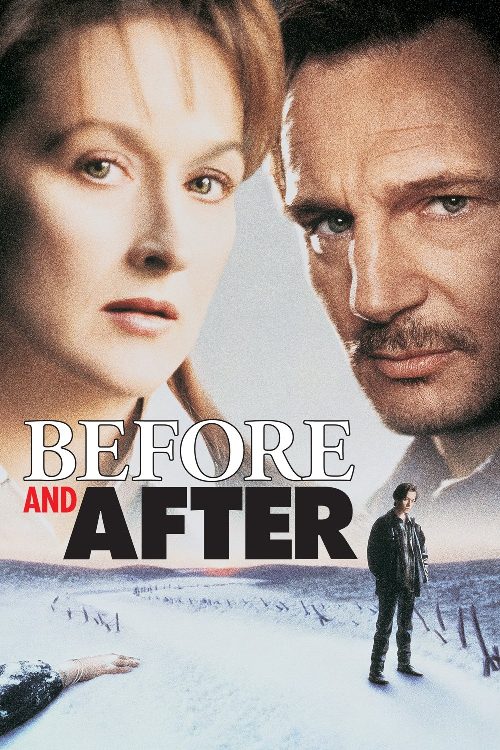
Two parents deal with the effects when their son is accused of murdering his girlfriend.
When a quiet suburban life is violently punctured by a criminal accusation, the resulting ripple effect often reveals more about the fragility of domestic trust than the crime itself. Before and After stands as a somber relic of mid-nineties American drama, capturing a period when the psychological thriller genre was shifting its focus toward the internal disintegration of the traditional family unit. While contemporary Indian cinema frequently explores the intersection of legal morality and social reputation in films like Drishyam or the recent wave of investigative dramas, this English-language production offers a distinct Western perspective on the same theme. It centers on the agonizing dilemma faced by a mother and father who must reconcile their deep-seated parental instincts with the terrifying possibility that their own child could be capable of a heinous act.
The narrative functions less as a standard courtroom procedural and more as a character-driven study of denial and moral ambiguity. Unlike the high-octane suspense often favored in current global thrillers, this film chooses a measured, claustrophobic approach to storytelling. It demands patience from the viewer, rewarding those who prefer to unpack the emotional toll of a trial rather than the mere mechanics of the evidence. For audiences who appreciate the nuanced tension found in modern Malayalam or Tamil dramas that dissect how a single tragedy can dismantle a household, this film provides an early blueprint for that kind of intense domestic interrogation. It is a compelling choice for anyone interested in the evolution of the crime-drama genre, particularly for those who enjoy stories where the most dangerous secrets are hidden within the sanctity of the home.
The production benefits from a cast that leans into the gravity of the situation, grounding the heightened stakes in a palpable sense of exhaustion and disbelief. By avoiding the typical sensationalism associated with murder mysteries, the film positions itself as a somber meditation on the limits of empathy and the terrifying blind spots inherent in parent-child relationships. It remains a notable entry for cinephiles who look back at the nineties as a formative era for character-focused suspense. Because it prioritizes the subjective experience of the parents over the objective facts of the case, the movie leaves the audience grappling with the same haunting questions as the protagonists, ensuring that the mystery lingers long after the final frame. Whether viewed as a historical curiosity or a taut study of human fallibility, it serves as a stark reminder of how quickly the mundane can descend into the catastrophic.
Cast(30)