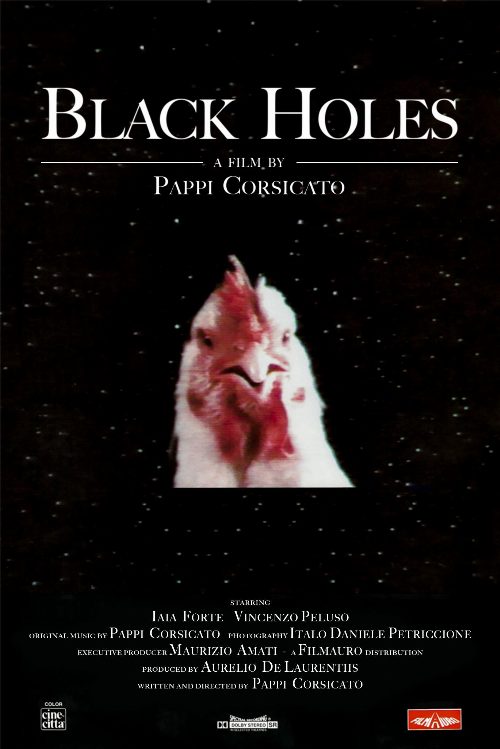
Black Holes(1995)
About Black Holes
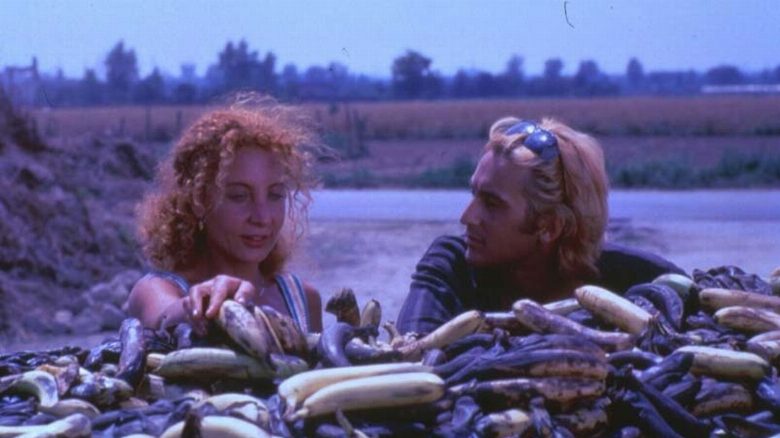
The impossible love between one prostitute, managing a bunch of handicapped prostitutes, and the homosexual Adamo. In the horrible suburb of Napoli we can follow among fantasy, mythology and reality the absurd life of the protagonists.
Pappi Corsicato invites audiences into a surreal corner of Naples where the boundaries of conventional storytelling dissolve into a vibrant, chaotic tapestry of human longing. Released in 1995, Black Holes functions as a bold departure from standard romantic comedies, opting instead for a gritty yet whimsical exploration of lives lived on the fringes of society. The narrative centers on a woman tasked with overseeing a group of sex workers who face significant physical challenges, weaving her path together with a man named Adamo who navigates his own complex identity. Rather than grounding itself in the stark realism often associated with urban dramas, the film embraces a theatrical, almost mythological aesthetic that mirrors the unpredictable rhythm of its setting. It is a work that feels deeply indebted to the visual eccentricity of Italian art-house cinema, finding beauty in the grotesque and sincerity in the bizarre.
For those who track the evolution of global independent cinema, this project stands out as a fascinating artifact of mid-nineties experimentation. It moves away from the polished, linear structures common in Hollywood imports of the era, favoring a fragmented style that reflects the psychological states of its characters. Viewers who enjoy films that challenge their perception of space and character will find much to admire here, as Corsicato demands an active engagement with his dreamlike imagery. The interplay between the mundane struggles of the Neapolitan suburbs and the fantastical elements introduced throughout the runtime creates an atmosphere that is both disorienting and deeply evocative. It acts as a bridge between the traditional character-driven dramas of the past and the more stylized, abstract works that would later gain prominence in international film festival circuits.
The chemistry between the ensemble cast, including Antonino Bruschetta and Cristina Donadio, anchors the film even when the narrative logic begins to bend under the weight of its own metaphors. By placing characters who are traditionally marginalized at the absolute center of his frame, the director forces a confrontation with themes of desire, isolation, and the search for connection in impossible circumstances. This is not a film designed for those seeking a straightforward narrative arc; it is an experience intended for the curious cinephile who appreciates when a director prioritizes tone and texture over traditional plot mechanics. As a piece of nineties European cinema, it remains a distinct, albeit challenging, entry that captures a specific moment of creative unrest, serving as a reminder that the most compelling stories are often those that refuse to be easily categorized or understood.
Cast(13)