
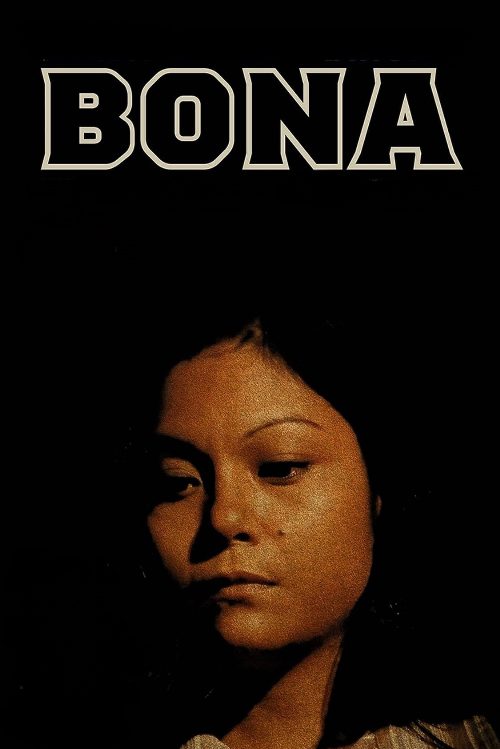
About Bona
Bona, a middle-class student, becomes infatuated with a struggling actor, Gardo, and drops out of school to live with him. She becomes his unpaid maid, performing chores and enduring his relationships with other women, in the hopes of reciprocation.
Obsession often manifests in cinema as a grand, sweeping romance, but Lino Brocka chooses to dismantle that fantasy entirely in his 1984 masterpiece Bona. While many films of the era leaned into the escapist potential of the silver screen, this production serves as a stark, unflinching look at the toxic intersection of fan culture and personal agency. By focusing on a young woman who trades her academic future for the proximity of a minor celebrity, the narrative challenges the audience to confront the parasocial dynamics that can hollow out a person's identity. It is a psychological study that feels remarkably ahead of its time, capturing the fragility of human devotion when it is directed toward a pedestal that was never meant to be climbed.
The film operates within the gritty, socially conscious framework that defined the Philippine New Wave, a movement that mirrors the intense regional realism found in contemporary Malayalam or parallel Hindi cinema. Much like the works of masters who interrogate the class divides of their nations, this story uses the setting of a cramped, unforgiving urban environment to mirror the emotional claustrophobia of its protagonist. Raquel Monteza delivers a performance that relies on quiet, incremental shifts in posture and gaze, effectively charting a descent that is as heartbreaking as it is inevitable. Alongside her, Phillip Salvador embodies the casual cruelty of a man who accepts adoration as a birthright, providing a perfect foil to the self-sacrificing nature of his houseguest.
Viewers who appreciate character-driven dramas that refuse to offer easy redemption will find this a compelling watch. It is not a film designed for comfort, but rather for those who seek to understand the darker edges of human attachment and the way societal status can warp our perceptions of love. By stripping away the glamour typically associated with the lives of performers, the director invites us to look at the power imbalance inherent in the idol-fan relationship. This is essential viewing for students of global cinema who want to see how a singular, focused premise can be used to critique the very industry that produces it. Whether you are a fan of classic international dramas or simply curious about the evolution of the tragic character study, this film offers a haunting, masterfully paced exploration of what happens when we lose ourselves in the pursuit of someone else's light.
Cast(11)