
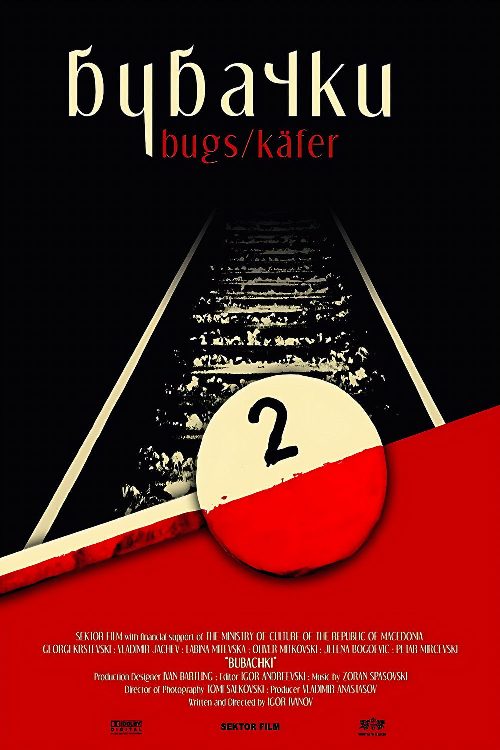
About Bugs
What becomes of a young man who lives entirely in his own world? Melancholy and powerful images bring back memories from the boy's past while revealing his contemplation on the present.
Igor Ivanov Izi crafts a haunting portrait of psychological isolation in his 2004 Macedonian drama Bugs, a film that feels remarkably ahead of its time in its exploration of internal detachment. While the global cinematic landscape often favors high-octane narratives, this particular work chooses to anchor itself in the quiet, stifling reality of a protagonist who seems to exist behind a glass wall. By focusing on the interplay between fleeting childhood echoes and the stark, unforgiving nature of his current existence, the director avoids the traps of conventional storytelling. Instead, he invites the audience into a sensory experience that prioritizes mood and atmospheric tension over traditional plot progression, making it a compelling study for those who appreciate European art-house cinema that dares to be uncomfortably introspective.
For viewers familiar with the nuanced storytelling often found in contemporary Indian regional dramas, such as the character-driven narratives emerging from the Malayalam industry, Bugs offers a familiar yet distinct flavor of human tragedy. It captures that specific ache of a life unmoored, mirroring themes of alienation that resonate across borders regardless of linguistic or cultural barriers. The performances, led by Vladimir Jacev and Labina Mitevska, are essential to this experience; they navigate the script with a restraint that allows the underlying sadness to bubble to the surface without ever feeling forced or melodramatic. This is not a film that provides easy answers or cathartic resolutions, but rather one that demands patience from its audience, rewarding them with a profound look at the fragility of the human ego.
Those who gravitate toward films that prioritize visual language—where silence speaks as loudly as dialogue—will find much to admire here. It is an ideal pick for cinephiles who seek out works that challenge the traditional structure of drama, opting instead for a fragmented, poetic approach to character development. As an early entry in the filmography of Igor Ivanov Izi, the project showcases an auteur finding his footing in the realm of existential exploration. By stripping away the unnecessary noise of mainstream production, the creative team centers the viewer on the raw, often jagged edges of the protagonist's psyche. It remains an evocative piece of work, positioned as a testament to the power of memory and the enduring difficulty of reconciling one's past self with the person they have become in the cold light of day.