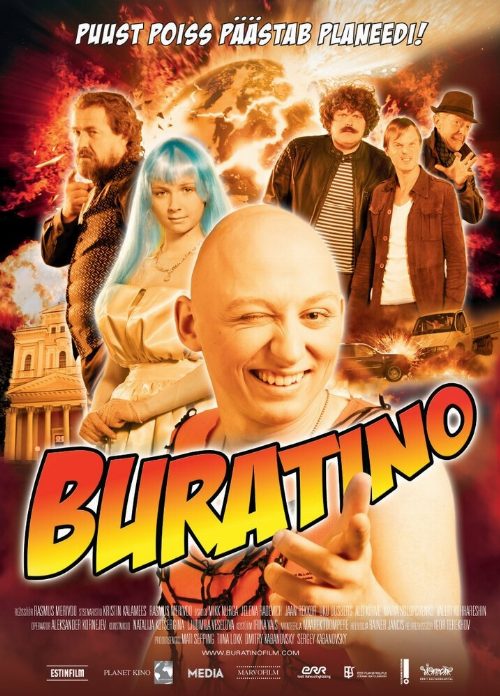
About Buratino, Son of Pinocchio
Imagine a mix of Repo Man, Oliver! and Pinocchio and you're on the road to grasping the tone of this bizarre Estonian take on Aleksey Nikolayevich Tolstoy's character Buratino, a wooden boy (or boyus woodenus, as the doctors in the film refer to him). Buratino's virginal mother wishes upon a star for a son and is immediately answered by what can only be called a rape-splinter. The woman gives birth almost immediately to her little wooden Buratino.
Stepping into the surreal landscape of Estonian cinema, Rasmus Merivoo delivers a cinematic experience that defies conventional genre boundaries with Buratino, Son of Pinocchio. This 2009 feature takes the classic wooden boy trope and drags it through a gritty, satirical lens that feels miles away from the whimsical animated adaptations most global audiences recognize. By blending dark comedy with a bizarre, almost fever-dream aesthetic, the film positions itself as a cult oddity that prioritizes stylistic experimentation over traditional storytelling. It captures a specific Eastern European sensibility that finds humor in the grotesque and the absurd, offering a stark departure from the polished, sentimental narratives often found in mainstream international fare.
The premise revolves around a miraculous and somewhat unsettling birth, as a lonely woman receives her wish for a son in the form of a living wooden creation. Rather than leaning into the innocence of the original literature, the film explores the chaos that ensues when this inanimate object takes human form. For viewers accustomed to the polished productions of the Indian film industry, where mythological roots often inform modern fantasy, this project offers a fascinating study in contrast. It eschews the grandeur and emotional resonance typical of Tollywood or Bollywood blockbusters, opting instead for a localized, idiosyncratic tone that feels deeply rooted in its own cultural eccentricity. The performances from Jaan Rekkor and Valeriy Kukhareshin ground the madness, providing a steady hand to the frantic pace of the director’s vision.
Those who gravitate toward indie cinema, dark satire, or films that refuse to explain their own internal logic will likely find much to appreciate here. It is not designed for the casual viewer seeking comfort, but rather for the cinephile who enjoys dissecting the strange, experimental fringes of global storytelling. Merivoo demonstrates a clear intent to provoke and unsettle, utilizing a visual language that feels tactile and intentionally unrefined. As an artifact of late-2000s European independent film, it serves as a reminder that the story of the wooden boy remains a versatile vessel for filmmakers to project their own subversive social commentary. Whether viewed as an avant-garde character study or a pitch-black comedy, the film remains a distinct, albeit challenging, entry in the history of Estonian film.
Cast(25)