
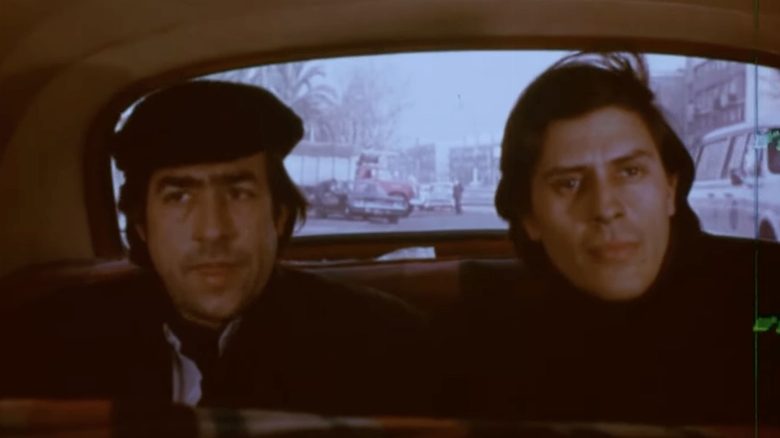

Dear Comrades(1977)
About Dear Comrades
Directed by Pablo de la Barra, Queridos compañeros (1977) is a Chilean-Venezuelan political drama that delves into the fervent revolutionary movements of the late 1960s. The film follows a group of young radical leftists that struggle to change the Chilean political status quo. The production of Queridos compañeros faced significant challenges, since filming started in 1973 but was abruptly halted due to the military coup in Chile that year. Director Pablo de la Barra managed to save the film's footage but lost the original audio tracks. In exile in Venezuela, he reconstructed the sound with the help of the original actors, completing the film in 1977. The film offers a poignant reflection on the aspirations and struggles of a generation striving for systemic change, providing insight into the political dynamics of Chile during a tumultuous period.
Few films carry as much historical weight in their very fabric as the 1977 production Dear Comrades. Directed by Pablo de la Barra, this Chilean-Venezuelan collaboration serves as both a narrative exploration of revolutionary idealism and a testament to the resilience of international cinema. While modern audiences in the Indian film landscape are accustomed to high-octane political thrillers that often simplify historical conflicts, this project offers a raw, unfiltered look at the fragility of ideological movements. By capturing the volatile atmosphere of late sixties Chile, the movie positions itself as a vital archive of a generation that saw their dreams of systemic reform collide with the harsh reality of political upheaval. It is a striking example of how art survives even when its creators are forced into exile, standing as a cinematic artifact that bridges the gap between personal conviction and national tragedy.
The true intrigue of this feature lies in its chaotic origin story, which mirrors the very instability it depicts on screen. Filming began in 1973, only to be cut short by the seismic military coup that reshaped the country. When the director fled to Venezuela, he arrived with salvaged reels but missing audio, requiring a laborious reconstruction process that saw the original cast return to dub their performances years after the initial shoot. This forced post-production process lends the film an almost dreamlike, detached quality that resonates deeply with the themes of displacement and lost time. For viewers who appreciate the gritty political realism found in classic parallel cinema or those interested in the craft of filmmaking under extreme duress, this work provides a fascinating case study in how technical adversity can inadvertently heighten the emotional stakes of a story.
Dear Comrades is an essential watch for cinephiles who value historical context over polish. It avoids the glossy trap of modern historical dramas, opting instead for a grainy, urgent aesthetic that feels authentic to its period. While it does not feature the musical numbers or stylized action sequences common in contemporary Telugu or Hindi political dramas, it shares their preoccupation with the intersection of individual morality and state authority. The performances by Nemesio Antunez and Gloria Laso are anchored in a palpable sense of urgency, reflecting the genuine fear and fervor of activists living on borrowed time. This is a deliberate, thought-provoking piece that demands the viewer pay attention to the subtext of every frame, making it a compelling choice for anyone looking to broaden their perspective on how global political shifts leave lasting marks on the medium of film.



