About Edward II
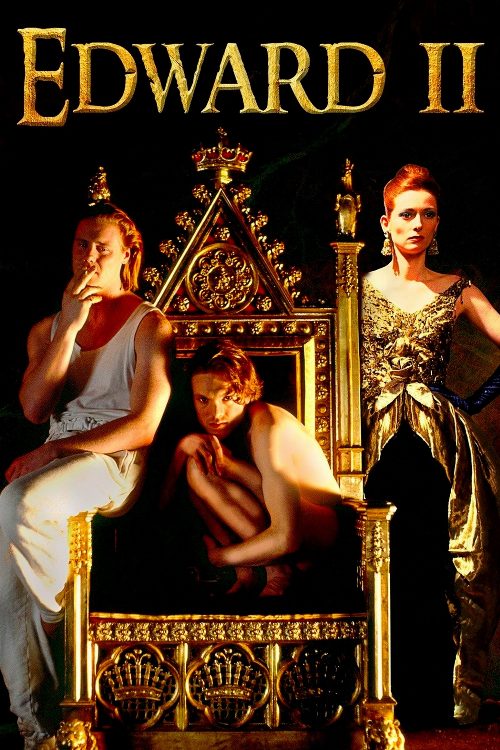
England, 14th century. King Edward II falls in love with Piers Gaveston, a young man of humble origins, whom he honors with favors and titles of nobility. The cold and jealous Queen Isabella conspires with the evil Mortimer to get rid of Gaveston, overthrow her husband and take power…
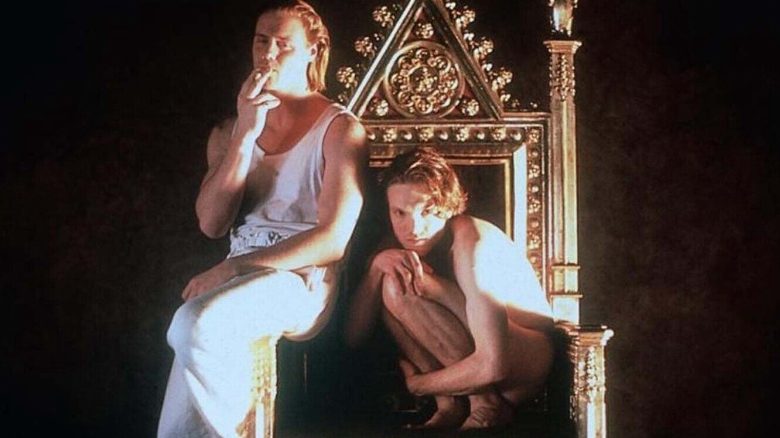
Derek Jarman remains one of the most provocative visionaries to ever translate historical tragedy into contemporary cinematic language. His 1991 adaptation of Edward II is far more than a period piece; it is a jagged, fiercely political deconstruction of royal power and forbidden desire that feels as vital today as it did decades ago. By stripping away the velvet curtains and traditional pageantry often associated with medieval dramas, Jarman crafts a stark, minimalist aesthetic that forces the viewer to confront the raw vulnerability of his protagonists. The film functions as both a queer manifesto and a scathing critique of state-sanctioned homophobia, placing the intimate relationship between the monarch and his companion at the volatile center of a crumbling political machine.
For audiences accustomed to the sweeping, orchestral spectacles of mainstream historical fiction, this interpretation offers a jarring but rewarding departure. Jarman anchors the narrative in a timeless space where modern costumes and industrial set pieces collide with the rigid hierarchies of the fourteenth century. This stylistic choice emphasizes the universality of the struggle, suggesting that the dynamics of prejudice and betrayal remain constant regardless of the era. The performances from the ensemble, including Kim Dare and Trevor Skingle, are stripped of artifice, leaning into a theatricality that highlights the desperation of characters trapped by their station. It is an essential watch for those who appreciate experimental cinema that prioritizes thematic depth and visual symbolism over historical accuracy.
This work serves as a stark reminder of how European independent cinema has long pushed boundaries, a spirit that mirrors the bold, experimental shifts currently seen in various regional Indian industries. Just as filmmakers in Malayalam or Tamil cinema often challenge social norms through grounded, character-driven storytelling, Jarman uses the lens of history to hold a mirror up to the society of his time. Viewers who enjoy films that prioritize subtext and stylistic courage will find this a fascinating study in defiance. It is a haunting piece of art that eschews typical genre conventions, demanding that the audience engage with its harsh realities rather than seeking comfort in a familiar historical fairy tale. Whether viewed as an act of rebellion or a tragic romance, the film stands as a testament to the power of the auteur to reshape established narratives into something profoundly personal and deeply unsettling.
Cast(50)