Fatherland(2026)
About Fatherland
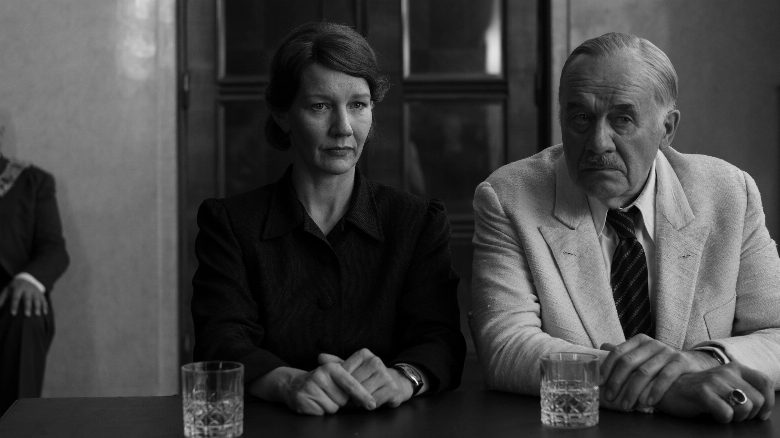
In 1949, German writer Thomas Mann and his daughter Erika embark on a road trip across a Germany in ruins, from US-dominated Frankfurt to Soviet-controlled Weimar.
The fractured landscape of post-war Europe serves as the haunting backdrop for Fatherland, a period piece that trades traditional battlefield heroics for the quiet, devastating intimacy of a family reckoning with a broken homeland. By focusing on the intellectual giant Thomas Mann and his daughter Erika as they traverse the jagged borders of a divided nation, the film positions itself as a cerebral road movie. Rather than leaning into the familiar tropes of historical dramas, it explores the psychological toll of returning to a space that has been fundamentally altered by ideology. The visual journey from the American-influenced sectors to the Soviet-occupied zones acts as a mirror for the internal dissonance of its protagonists, who must grapple with the ghosts of a country that no longer recognizes them.
This project is a significant departure from the pulse-pounding, high-octane narratives often prioritized in contemporary cinema, offering instead a delicate character study that will appeal to fans of meditative, slow-burn historical dramas. The casting of Fritzi Haberlandt and Joanna Kulig brings a sophisticated gravity to the screen, grounding the high-minded philosophical debates in a palpable sense of human vulnerability. For audiences who appreciate the nuanced storytelling found in the best of global arthouse cinema, this film provides a sharp look at the intersection of private grief and public history. It is a rare example of a period piece that prioritizes the internal migration of its characters, highlighting the difficulty of finding a home in a territory defined by geopolitical chess moves.
The decision to frame the narrative through the lens of one of literature’s most complex familial relationships adds a layer of intellectual rigor that elevates the film above standard historical fare. It reflects a growing trend in global cinema to revisit the mid-twentieth century not to re-enact battles, but to interrogate the lingering trauma that shaped the modern world. By focusing on the year 1949, the film captures a pivotal moment of transition where the dust had settled but the wounds remained raw. Viewers who enjoy deep dives into twentieth-century cultural history or those who admire the work of international performers bringing depth to legendary figures will find this a compelling watch. Fatherland invites its audience to look past the political maps of the era and witness the personal cost of history as it is written on the faces of those forced to live through its immediate aftermath.
Cast(37)