
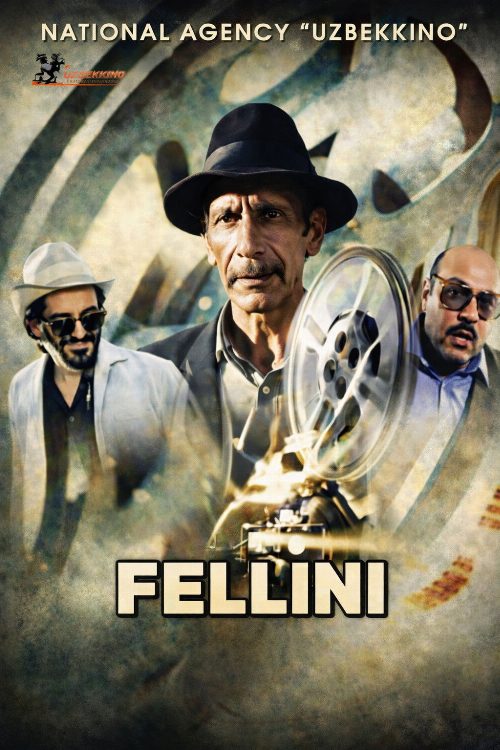
Fellini(1999)
About Fellini
In a Karakalpak town, an old movie theater is living out its last days. Once upon a time, this was the shore of the Aral Sea, where life was vibrant and the theater flourished. However, with the drying up of the Aral Sea, the country has also changed. The current owner of the theater, a projectionist nicknamed Fellini, is deeply devoted to cinema. His wife, however, does not understand or support his unprofitable passion. One day, a film crew arrives in the town, and Fellini helps them in any way he can, even appearing in an episode.
Nazim Abbasov crafts a poignant meditation on the intersection of personal legacy and environmental decay in his 1999 feature Fellini. Set against the backdrop of a desolate Karakalpak town that once thrived as a bustling port, the narrative centers on a projectionist whose devotion to the silver screen persists long after the waters of the Aral Sea have receded. While modern global cinema often focuses on the spectacle of change, this film finds its strength in the stillness of a man clinging to his craft. The projectionist, affectionately dubbed after the iconic Italian auteur, represents a vanishing breed of cinephile whose identity is tethered to the magic of light hitting a screen. His struggle is not merely financial but existential, as he navigates the friction between his unwavering artistic obsession and the pragmatic, often dismissive, perspective of his wife.
The arrival of a visiting film crew serves as the primary catalyst for the story, transforming the dusty, forgotten theater into a site of renewed relevance. This narrative choice highlights the contrast between the artificial beauty captured on celluloid and the stark, harsh reality of a region suffering from ecological collapse. It is a work that resonates particularly well with audiences who appreciate the slow-burn storytelling prevalent in independent world cinema. By focusing on a character who finds beauty in the remnants of a lost era, Abbasov invites viewers to consider how we preserve our memories when the landscape that once housed them has physically withered away. The film functions as both a character study and a quiet elegy for a community grappling with the loss of its natural landmarks.
Viewers who enjoy character-driven dramas that prioritize atmosphere over rapid pacing will likely find this a rewarding experience. It stands as a unique entry in the landscape of late nineties international cinema, offering a perspective that feels both localized and universally relatable in its depiction of human stubbornness. Baxtiyor Zokirov delivers a performance that anchors the film, imbuing the projectionist with a sense of dignity that transcends the crumbling walls of his theater. For those interested in the history of Central Asian filmmaking, this production provides a window into a specific cultural transition, capturing a moment where the promise of a new, globalized film industry brushed against the isolation of a post-Soviet reality. It is a thoughtful, contemplative piece that remains an essential watch for anyone who believes that cinema is more than just entertainment, but a vital link to our collective past.