

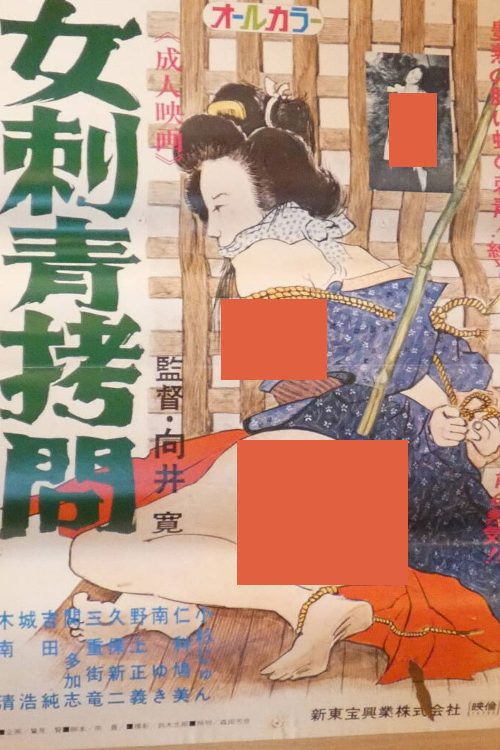
Female Tattoo Torture(1974)
About Female Tattoo Torture
Pink film by Kan Mukai.
Deep within the archives of seventies Japanese cult cinema lies a curiosity that challenges modern sensibilities while capturing the raw, transgressive spirit of the pink film movement. Female Tattoo Torture serves as a stark reminder of how the Nikkatsu and Shintoho legacies paved the way for directors like Kan Mukai to explore the darker fringes of human obsession and bodily aesthetics. At the time of its release, the Japanese film industry was navigating a period of intense experimentation, shifting away from traditional studio constraints toward independent productions that prioritized shocking visuals and provocative thematic inquiries. This particular work stands out for its fixation on the intersection of artistic permanence and physical suffering, a motif that has appeared in various forms throughout Asian genre history, often blurring the lines between high art and exploitation.
The narrative focuses on a grim, stylized premise that centers on the ritualistic application of ink as a conduit for power and pain. While contemporary audiences might approach such a film as a historical artifact, it offers a fascinating look at how 1970s directors utilized the limited resources of the pink film subgenre to craft unsettling, atmospheric vignettes. The performances by Jun Kosugi and Hatomi Nishina are grounded in the specific, heightened acting style typical of the era, where emotional intensity often took precedence over naturalism. For students of world cinema or those fascinated by the evolution of Japanese grindhouse tropes, the film functions as a time capsule of an industry that was unafraid to push boundaries in ways that remain visually jarring even decades later.
Viewers who enjoy the works of filmmakers who operated on the fringes of commercial cinema will likely find the aesthetic choices here particularly compelling. It is not a film designed for mainstream consumption, but rather a niche entry for those interested in the darker side of body modification narratives and the visual language of seventies exploitation. Kan Mukai demonstrates a clear intent to unsettle, positioning the film as a visceral experience rather than a traditional drama. By focusing on the interplay between the tattoo artist and the subject, the movie taps into primal anxieties about control and identity that continue to resonate in modern horror and thriller genres. Whether viewed as an exercise in style or a relic of a bygone era of transgressive filmmaking, it remains a distinct entry in the vast landscape of Japanese cinematic history.



