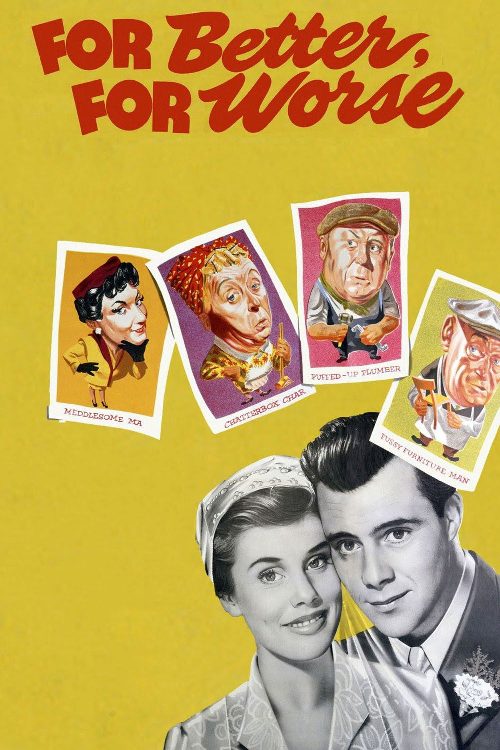
About For Better, for Worse
In postwar London a young graduate and his girlfriend decide to marry. Her well-to-do parents are not convinced, but they agree once he has got a £5.10.0 job and a 30/- a week single-room flat. The newly-weds find money fearfully tight, the flat cramped, the neighbours a trial, and her parents always hovering. Can faith conquer all? Is there some way of getting rid of tea-leaves except down the sink?
Stepping back into the mid-1950s, For Better, for Worse captures the specific anxieties of a generation navigating the transition from wartime scarcity to the optimism of the early postwar era. While contemporary audiences today might be more accustomed to the high-octane emotional dramas or massive scale spectacles currently dominating the Telugu and Hindi box offices, this British comedy offers a charmingly grounded look at domestic friction. It centers on a pair of young lovebirds attempting to build a life together against the backdrop of a housing shortage and the looming shadow of parental disapproval. By focusing on the minutiae of household budgeting and the intrusive nature of in-laws, the film bridges a gap between the traditional class structures of its time and the modern desire for independence.
The film stands out as a quintessential piece of social satire, reflecting a period when the romantic comedy genre was heavily influenced by the constraints of everyday life. For viewers who appreciate the nuanced family dynamics found in classic Indian cinema, the struggles of this young couple will feel surprisingly resonant. It avoids the broad strokes of later farce in favor of observational humor that highlights the absurdity of early domestic bliss. Dirk Bogarde delivers a performance that anchors the narrative, showcasing the charisma that would eventually make him a household name. His portrayal of a man attempting to maintain his dignity while navigating a minuscule salary and a cramped flat is both relatable and endearing, providing the perfect foil to the skepticism of the older generation.
For Better, for Worse is an essential watch for cinephiles who enjoy period pieces that prioritize character chemistry over grand spectacle. It belongs to a lineage of films that find humor in the mundane, much like the lighter social dramas seen in the Malayalam film industry today, where the focus remains on the interpersonal conflicts of everyday people. Whether it is the battle with stubborn plumbing or the awkwardness of uninvited guests, the film suggests that the path to a happy marriage is paved with compromise. It serves as a gentle reminder that even in the most restricted circumstances, love often finds a way to endure, making it a delightful choice for those looking to explore the roots of the modern romantic comedy.
Cast(29)