About Forbidden Fruit
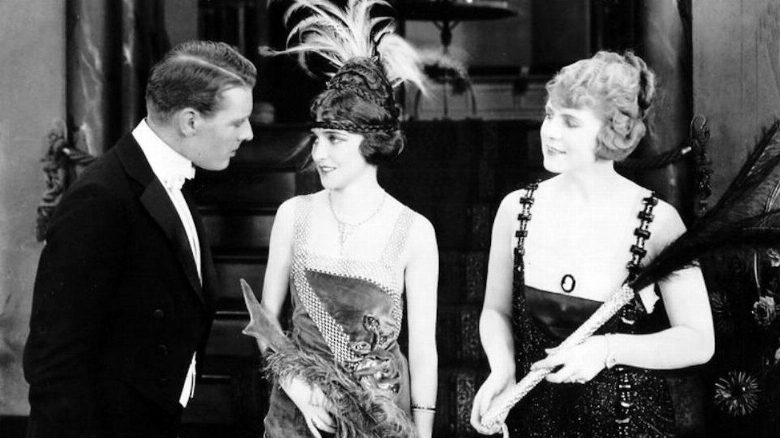
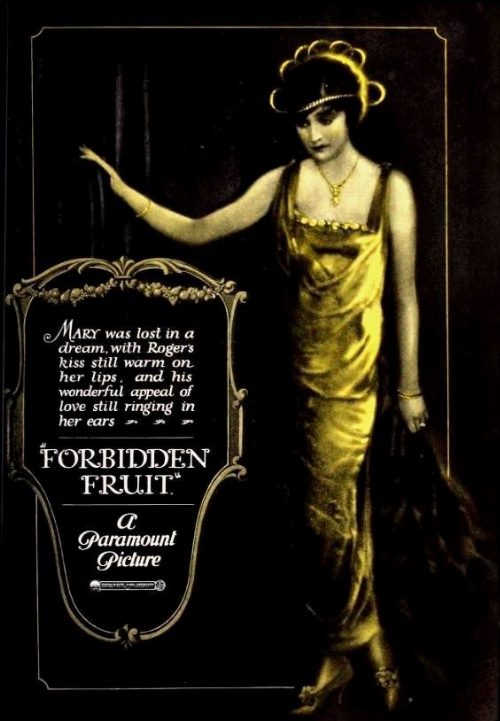
Mary Maddock works as a seamstress to bring home money while her husband Steve, unemployed, has no real prospects of earning money. Mary's employers, are trying to strike an oil related business deal with a rich man by the name of Nelson Rogers. The deal does not seem to be on the table, as Mr. Rogers is leaving town shortly and does not have the time to work out the details of such a deal. In an order to entice him to stay, Mrs. Mallory - wife of Mr. Mallory who is proposing the business deal - convinces Mary to be her guest at a dinner party with the intent of making Mr. Rogers fall for her and thus stay long enough for Mr. Mallory to make him agree to a business deal.
The silent era of cinema often relied on the stark contrasts of high society and the working class, a thematic trope that Cecil B. DeMille mastered with surgical precision in the early twentieth century. Forbidden Fruit stands as a fascinating relic of this period, arriving just as the director began pivoting toward the lavish spectacles that would define his later career. At its core, the narrative functions as a psychological trap disguised as a social engagement, centering on a woman whose labor is commodified by those who view her status as a mere tool for leverage. By positioning a seamstress at the heart of a high-stakes business negotiation, the film explores the intersection of economic desperation and moral compromise, themes that feel surprisingly resonant even a century later.
For cinephiles who track the evolution of the melodrama, this production offers a window into how early Hollywood navigated the complexities of class mobility. While contemporary Indian audiences are well-acquainted with the trope of the common person being thrust into the elite world to serve a hidden agenda, this classic provides the blueprint for such storytelling. The tension is not derived from physical conflict but from the quiet, suffocating pressure placed upon the protagonist to perform a role that is not her own. Agnes Ayres anchors the film with a performance that balances vulnerability and quiet resolve, effectively capturing the strain of a woman caught between her domestic reality and the artificial theater of the wealthy.
The appeal of this period piece lies in its meticulous staging and the predatory nature of its supporting characters. It is an essential watch for viewers who enjoy vintage dramas that favor character-driven manipulation over explosive action. DeMille demonstrates a keen eye for the vanity of the upper crust, framing the dinner party not as a celebratory gathering but as a tactical battlefield. By focusing on the moral cost of the deal, the film invites the audience to consider the human price tag hidden behind corporate aspirations. It remains a compelling example of how silent storytelling utilized visual cues to expose the hollow motives of the powerful, ensuring that the stakes felt just as personal as they were professional. This remains a noteworthy entry for anyone studying the development of romantic drama as a tool for social commentary.
Cast(11)