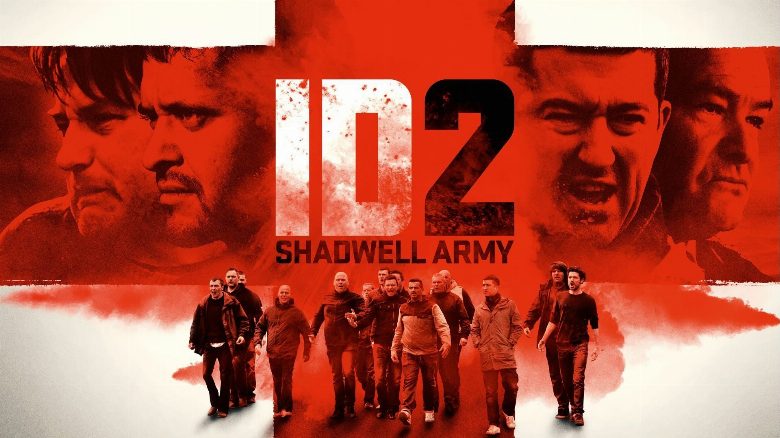
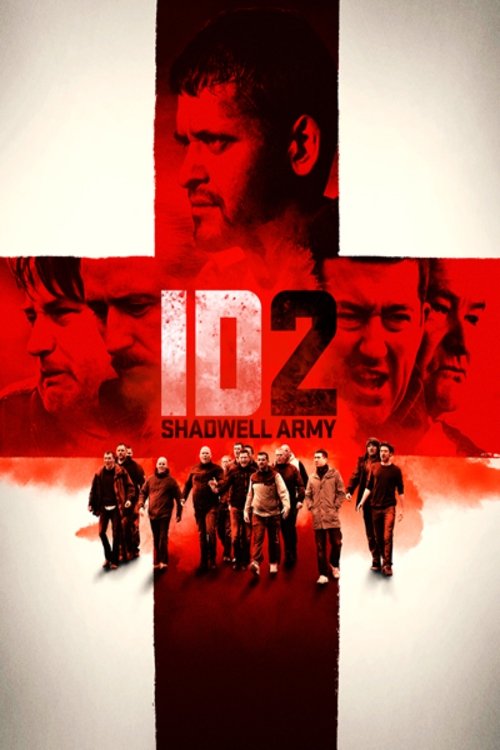
About ID2: Shadwell Army
A young British Asian, Mo is a fast-rising police officer who goes under cover infiltrating Shadwell's resurgent hooligan element, who are fired up by Shadwells's takeover by a Russian oligarch and their unlikely adventure into European competition. Mo quickly becomes embroiled in the local schism between the BNP and EDL and plans to build a new mosque in the shadow of the Shadwell ground creates an explosive environment in which football and political violence form a perfect storm of social unrest.
Football culture has long served as a volatile backdrop for British cinema, yet ID2 Shadwell Army manages to pivot from the traditional hooligan narratives of the nineties to address the fractured social landscape of modern London. While many films in this gritty subgenre focus solely on the tribalism of the terraces, this sequel moves the goalposts by weaving in the complexities of identity politics and the rising tensions surrounding community integration. By centering the story on a police officer navigating a dangerous double life, the narrative taps into a heightened sense of paranoia that feels distinct from its predecessor. It examines how global shifts, such as foreign ownership of local clubs and the influence of far-right movements, collide with the everyday reality of a neighborhood trying to find its footing amid rapid change.
For those who appreciate the evolution of the British crime drama, the film functions as a stark exploration of how sporting allegiances can be weaponized in a polarized society. The casting of Linus Roache provides a sophisticated anchor for the production, grounding the more chaotic elements of the plot in a performance that conveys the psychological toll of deep-cover operations. Unlike standard thrillers that rely on mindless aggression, this project is positioned as a socio-political study, appealing to viewers who prefer their action sequences layered with commentary on contemporary civic friction. The director balances the adrenaline of match-day chaos with the slower-burn tension of ideological conflict, making it a compelling watch for those interested in the intersections of sports, class, and radicalization.
The film successfully captures a specific moment in the mid-2010s when the intersection of religion, nationalism, and athletics became a powder keg in urban centers. It avoids the trap of glorifying its subjects, instead casting a critical eye on the groups that thrive in the shadows of stadium lights. By focusing on a protagonist who must reconcile his professional duty with his own cultural background, the story gains an emotional weight that elevates it above typical genre offerings. It is a sharp, atmospheric piece that will resonate with audiences who enjoy stories about systemic infiltration and the human cost of maintaining order in a society that seems to be pulling itself apart at the seams. Whether one is a fan of the original or simply drawn to intense, character-driven dramas, this installment offers a sobering perspective on the lasting influence of hooliganism in the face of modern cultural evolution.
Cast(15)