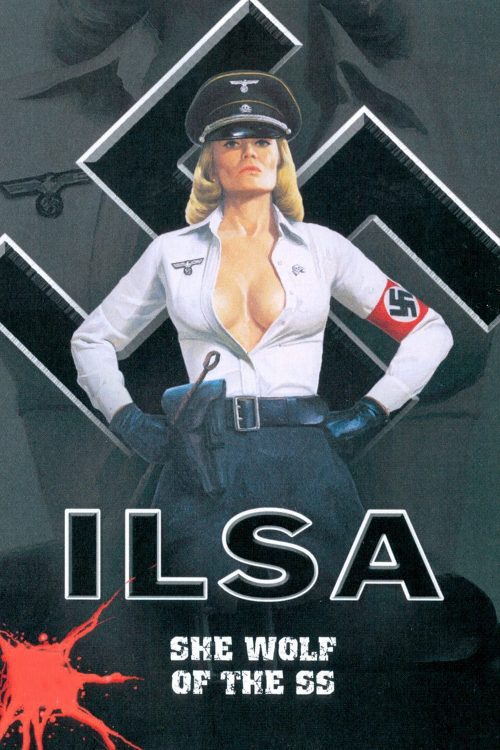
Ilsa: She Wolf of the SS(1975)
About Ilsa: She Wolf of the SS
Ilsa, a warden at a Nazi death camp that conducts experiments on prisoners, strives to prove that women can withstand more pain and suffering than men, and therefore should be allowed to fight on the frontlines.
Cinema history is littered with polarizing artifacts, but few titles command the same infamous reputation as the 1975 exploitation feature Ilsa She Wolf of the SS. Far removed from the refined storytelling found in contemporary Indian cinema, this Don Edmonds production occupies a dark corner of mid-seventies grindhouse culture. Rather than focusing on historical accuracy or traditional war drama, the film functions as a stylized, transgressive piece of pulp fiction that leans heavily into shock value. It presents a distorted vision of a concentration camp, centering on a commandant who orchestrates sadistic medical trials to support a twisted sociological hypothesis regarding the threshold of physical endurance. For those interested in the evolution of extreme genre filmmaking, the work serves as a prime case study of how low-budget producers leveraged taboo subjects to capture the attention of midnight movie audiences.
The film is defined by its unrelenting commitment to its own grim aesthetic, prioritizing a heightened, almost comic-book version of villainy over nuanced character development. Daria Nicolodi or similar icons of the era might have brought a different energy to the role, but Dyanne Thorne delivers an iconic, larger-than-life performance that anchors the entire experience. It is distinctly a product of its time, capturing the specific anxieties and aggressive stylistic choices of mid-decade American exploitation. While current trends in Telugu or Malayalam cinema often explore complex social hierarchies and moral ambiguity, this production takes a different route, discarding subtlety in favor of graphic intensity. It is a stark reminder of a period when independent filmmakers were testing the boundaries of the Motion Picture Association ratings system with little regard for taste or mainstream sensibilities.
Modern viewers should approach this title with a clear understanding of its origins as a cult curiosity rather than a piece of prestige historical fiction. It is intended for those who study the fringes of horror and exploitation history, offering a glimpse into the darker side of seventies independent production. While it lacks the emotional resonance or technical polish of modern global cinema, its legacy as a trendsetter for the women-in-prison subgenre remains undeniable. The film is not for the faint of heart, nor does it attempt to offer any meaningful insight into the real horrors of the Second World War. Instead, it stands as a provocative, albeit deeply controversial, milestone that continues to spark debate among film historians regarding the limitations of exploitation cinema and its enduring impact on global pop culture.
Cast(22)