About It Stains the Sands Red
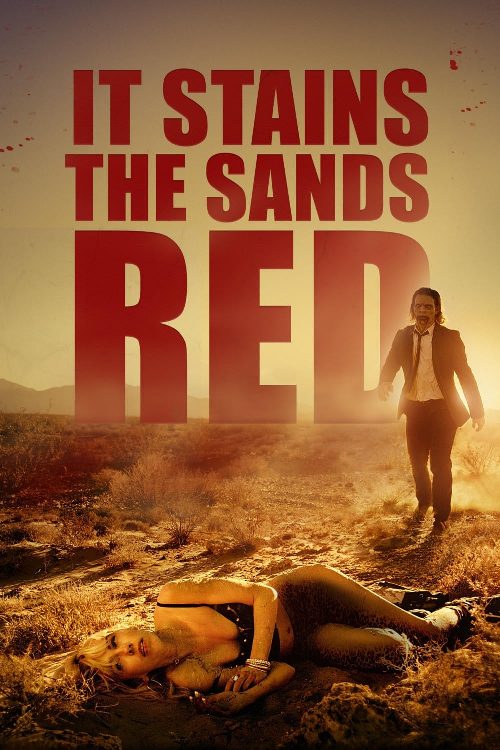
In the throes of a zombie apocalypse, a troubled woman from Las Vegas with a dark past, finds herself stranded in the desert with a lone and ravenous zombie on her tail.
The vast, sun-drenched expanse of the Nevada desert becomes a surreal stage for a unique dance between survival and absurdity in the 2016 genre-bending feature It Stains the Sands Red. While many entries in the undead subgenre prioritize frantic, wall-to-wall action or bleak, nihilistic survivalism, this production opts for a more intimate and character-driven approach. By narrowing the scope to a single protagonist and her persistent, shambling pursuer, director Colin Minihan elevates a simple premise into something resembling a dark, psychological road movie. It is a refreshing departure from the massive ensemble casts that typically define apocalypse cinema, choosing instead to focus on the grit and physical toll of being hunted across an unforgiving landscape.
For audiences accustomed to the high-octane spectacle of contemporary Indian horror-comedies, which often blend mythological elements with slapstick, this film offers a distinct tonal shift. It occupies a space where the desperation of a thriller meets the deadpan humor of an odd-couple dynamic. The film acts as a fascinating study of pacing, proving that tension does not always require a horde of monsters if the emotional stakes for the lead character are sufficiently high. This approach resonates with the current trend of minimalist storytelling seen in modern global cinema, where filmmakers are increasingly stripping away complex lore to examine how individuals navigate extreme circumstances. It is an ideal watch for those who appreciate character development over jump scares and enjoy seeing how a narrative can sustain engagement through dialogue and environmental storytelling alone.
The performance of Brittany Allen is the anchor of the experience, as she portrays a woman whose personal baggage is almost as heavy as the physical threat stalking her heels. Her evolution from a frantic survivor to someone forced to confront the reality of her own life makes the film stand out in an overcrowded market. Fans of psychological horror who enjoy slow-burn tension will likely find the interplay between the human lead and the relentless, singular zombie antagonist particularly compelling. By reframing the zombie not just as a creature to be feared but as a constant, looming shadow, the movie forces the audience to consider the exhaustion of living in a world that has already ended. It is a gritty, stripped-back piece of filmmaking that prioritizes mood and character evolution, making it a noteworthy addition to the survival horror canon.
Cast(11)