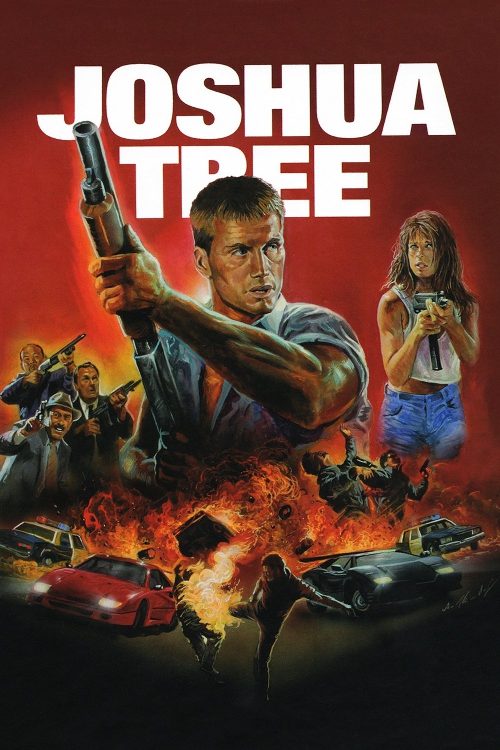
About Joshua Tree
A Los Angeles police detective tracks a fugitive who heads for the desert with a deputy sheriff as hostage.
The neon-soaked streets of Los Angeles serve as a volatile backdrop for the high-octane pursuits found in Joshua Tree, a quintessential nineties action feature that channels the relentless energy of the era. While modern global cinema, particularly the explosive landscapes of contemporary Indian action films, often leans into hyper-stylized choreography and grand mythological stakes, this production keeps its feet firmly planted in the gritty reality of the American desert. The narrative hinges on a desperate flight across barren terrain, pitting a relentless law enforcement official against a man cornered by circumstance. It is a classic game of cat and mouse that relies heavily on the physical prowess of its leads and the stark, unforgiving beauty of the California wilderness to create a sense of mounting tension that feels distinctly stripped down compared to today’s digital-heavy spectacles.
For enthusiasts of the genre who appreciate the transition from eighties excess to the more grounded, visceral storytelling of the following decade, this film offers a fascinating look at mid-tier action craftsmanship. The casting choices, including Edward Stone and Steven D. Ito, reflect a period when character-driven conflict was just as vital as the pyrotechnics on screen. Regional audiences in India, who are currently witnessing a golden age of high-concept action cinema in industries like Telugu and Tamil film, might find this project to be an interesting case study in pacing. Unlike the sprawling runtimes and elaborate world-building common in today’s pan-Indian blockbusters, this film is focused, lean, and intensely concentrated on the immediate stakes of its central manhunt. It provides a masterclass in how a singular, isolated setting can amplify the psychological pressure on its protagonists.
Viewers who enjoy suspenseful thrillers that prioritize location as a silent character will likely find the arid, sun-bleached expanse of the desert backdrop particularly compelling. It is a film for those who prefer their action served with a side of survivalist grit rather than grandiose musical sequences or intricate subplots. While it may not possess the sprawling scale of a modern international crossover, its dedication to the mechanics of pursuit makes it a reliable entry in the library of early nineties genre filmmaking. By examining how the film balances the pursuit of a fugitive with the volatile dynamic between captor and hostage, audiences can see how the fundamental building blocks of the action genre were refined during this period. It remains a notable example of the era’s commitment to physical stunts and tangible, real-world danger.
Cast(52)














Crew
Original Music Composer
Director
Stunt Double
Casting
Second Unit Cinematographer
Costume Design
Writer
Stunt Coordinator
Similar Films