
Kadosh(1999)
About Kadosh
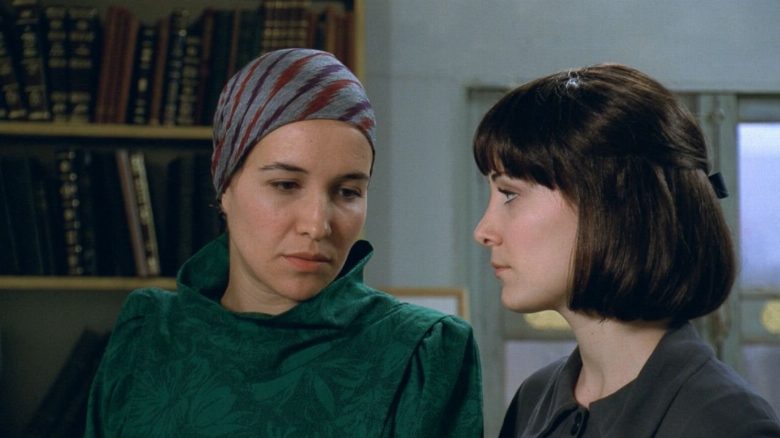
The year 2000 approaches in Jerusalem's Orthodox Mea Shearim quarter, where the women work, keep house, and have children so the men can study the Torah and the Talmud. Rivka is happily and passionately married to Meir, but they remain childless. The yeshiva's rabbi, who is Meir's father, wants Meir to divorce Rivka: "a barren woman is no woman." Rivka's sister, Malka, is in love with Yakov, a Jew shunned by the yeshiva as too secular. The rabbi arranges Malka's marriage to Yossef, whose agitation when fulfilling religious duties approaches the grotesque. Can the sisters sort out their hearts' desires within this patriarchal world? If not, have they any other options?
Amos Gitai crafts a piercing look into the insulated existence of the Mea Shearim neighborhood, where the rigid dictates of ultra-Orthodox life collide with the quiet, persistent pulse of human desire. Set against the backdrop of a changing millennium, this Israeli drama navigates the suffocating expectations placed upon two sisters whose lives are dictated by religious authority. While the industry is often celebrated for its vibrant contemporary narratives, this film serves as a somber, meditative counterpoint that examines the cost of tradition when it is weaponized against individual autonomy. The story moves with a measured, almost observational pace that forces the audience to confront the intersection of faith, marriage, and the systemic erasure of female agency within a closed community.
The film distinguishes itself by focusing on the domestic toll of patriarchal power structures. Rivka and Malka represent two sides of a struggle for selfhood, with one grappling with the crushing weight of infertility in a society that measures a woman solely by her reproductive capacity, and the other facing the prospect of a loveless union forced upon her by the hierarchy. The tension is palpable as the narrative highlights how spiritual devotion can be twisted to serve personal control. Fans of rigorous, character-driven dramas who appreciate cinema that tackles societal insularity will find much to admire here. It is a work for viewers who prefer deep psychological inquiries over plot-heavy spectacles, as the strength of the film lies in its ability to capture the claustrophobia of its setting through intimate, deliberate camera work.
Amos Gitai brings his signature intellectual gravity to the material, grounding the story in a specific cultural reality that feels both timeless and urgently relevant. By juxtaposing the internal emotional lives of the sisters against the outward rigidity of the rabbinical leadership, the film effectively portrays a world where love is treated as a dangerous subversion. The performances of Yaël Abecassis and Meital Barda are particularly striking, as they convey volumes through subtle gestures and expressions rather than grand proclamations. This cinematic exploration of resistance within a strictly codified society remains a haunting portrait of the human spirit attempting to breathe under the heavy mantle of orthodoxy. It stands as a testament to the power of film to cast light on the hidden tensions of insular communities, inviting the audience to reflect on the universal struggle between personal freedom and communal obligation.