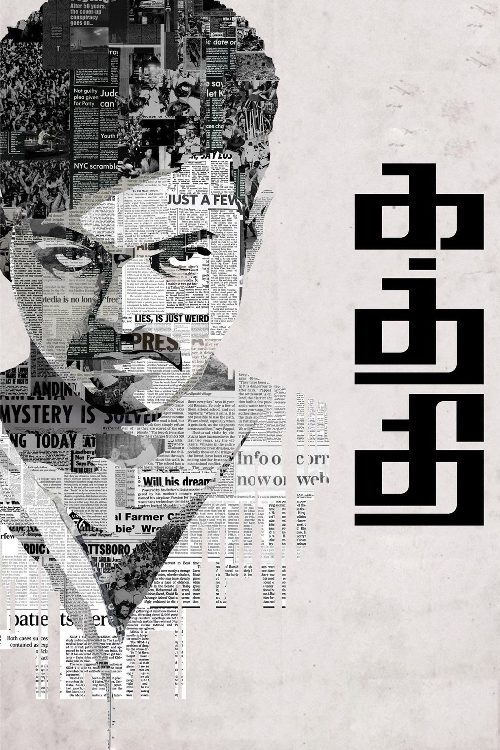
Kaththi(2014)
About Kaththi
Kathiresan aka Kaththi, a criminal, escapes from the Kolkata prison and comes to Chennai, where he comes across his doppelganger Jeevanandham, fighting for his life after being shot at by unknown men. Kathir decides to pass off as Jeeva and make away with a lump sum amount but once he realizes who Jeeva really is, Kathir turns a crusader.
The landscape of Tamil commercial cinema often thrives on the duality of the common man versus the systemic giant, and Kaththi stands as a definitive pillar of this narrative tradition. Directed by AR Murugadoss, the film masterfully utilizes the star power of Vijay to bridge the gap between high-octane spectacle and poignant social commentary. By placing the protagonist in a situation where he must inhabit the life of his own lookalike, the screenplay moves beyond a simple identity swap thriller. It transforms into a layered exploration of corporate exploitation and the struggle of the agrarian community, grounding its flashy action sequences in a reality that resonates deeply with the rural and urban population alike. This pivot from a self-serving criminal to a reluctant champion of justice serves as the heartbeat of the story, elevating it above standard genre fare.
At the center of this production is the magnetic performance of Vijay, who navigates two distinct personas with distinct body language and emotional weight. His ability to anchor a film that balances massive scale with sensitive thematic concerns has cemented his status as a titan of the industry. The casting of Neil Nitin Mukesh as a sophisticated, cold-blooded antagonist provides the perfect foil for the gritty, grassroots battle fought by the lead. For viewers who appreciate cinema that manages to integrate a strong moral message without sacrificing the exhilaration of a big-budget entertainer, this project is a quintessential watch. It represents a specific era in Kollywood where the director refined the formula of the mass hero by forcing him to confront socioeconomic issues rather than just generic villains.
Beyond the thrills, the film occupies a significant space in the history of Tamil cinema by highlighting the plight of farmers against the encroachment of multinational corporations. It captures a zeitgeist where regional audiences demanded more than just escapism, pushing filmmakers to weave current affairs into their scripts. Whether you are a fan of the stylish cinematography typical of modern Indian action films or you are interested in the evolution of the vigilante trope, this work provides a compelling case study. It remains a polished, thought-provoking piece that encourages its audience to look at their own environment with a more critical lens, all while delivering the high-energy sequences that have come to define the career of its director. It is a benchmark for how to blend commercial demands with narrative substance.