
About Lulu
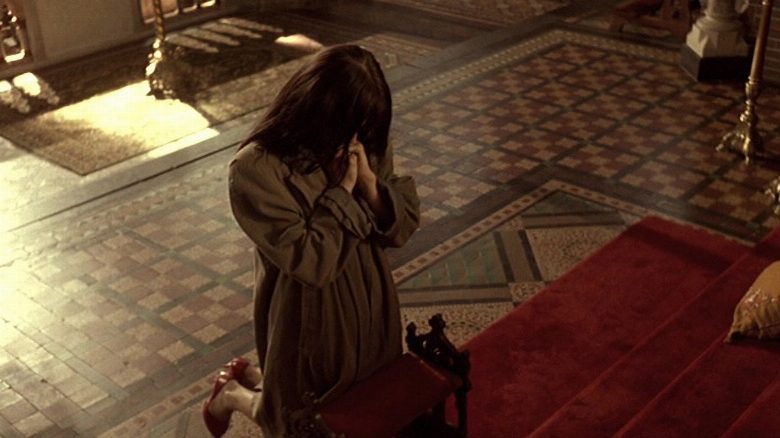
Leon Mortier, a wealthy publisher, whilst driving through the forest one day, stops when he sees Lulu walking down the long narrow road. She gets into the car. Leon is amused and intrigued by her. When he pulls off, suddenly out of nowhere a man appears in front of the car and Leon accidentally hits him. He decides to take them both home to recover. Leon falls madly in love with Lulu. Both Lulu and the man stay on with him in the house. Lulu's behavior is unpredictable. Leon becomes suspicious and paranoid about her. As he begins to suspect that his friends are being unfaithful with Lulu, he decides to throw a dinner party with some of his closest friends. During the dinner he wants to confront them with their infidelity and expel them all from his life with Lulu. But when he discovers his son in the arms of Lulu, he decides also to get rid of her, a plan which backfires in a most unexpected way.
Few films manage to capture the intoxicating blend of obsession and moral decay as effectively as Maartje Seyferth explores in her 2005 psychological drama Lulu. By placing a wealthy, established man in the path of a mysterious drifter, the narrative pivots away from a traditional romance and into a claustrophobic exploration of how quickly a life of comfort can unravel when an unpredictable catalyst enters the home. For fans of global cinema who appreciate the nuanced, character-driven tension found in contemporary Malayalam or European art-house thrillers, this film offers a fascinating look at the disintegration of social boundaries. It feels remarkably relevant today, standing as a precursor to the modern obsession with psychological power plays and the fragility of the bourgeois lifestyle.
The story follows a publisher whose fascination with a young woman he encounters on a forest road leads him down a path of escalating paranoia. What starts as an act of kindness following a tragic road accident quickly transforms into a domestic nightmare as the protagonist finds his sanctuary invaded by guests who refuse to leave. The director masterfully uses the setting of the home to mirror the internal state of the lead character, forcing the audience to witness his descent from a position of control to one of desperate isolation. Georgina Verbaan delivers a performance that keeps viewers guessing, embodying a sense of volatility that makes the growing unease within the household feel palpable and earned.
This film is particularly well-suited for viewers who enjoy slow-burn narratives where the stakes are emotional rather than physical. While it lacks the high-octane sequences found in mainstream commercial Telugu or Hindi cinema, it compensates with a sharp, biting examination of human desire and the dark side of jealousy. It acts as a mirror for anyone interested in the darker impulses of the human psyche, specifically how we project our deepest insecurities onto those we claim to love. If you enjoy cinema that challenges your loyalties and keeps you questioning the motives of every character on screen, this production serves as a compelling, if unsettling, study of how a single decision can dismantle an entire world. It remains a notable entry in Seyferth’s filmography, proving that the most dangerous traps are often the ones we invite into our own living rooms.