About Marci X
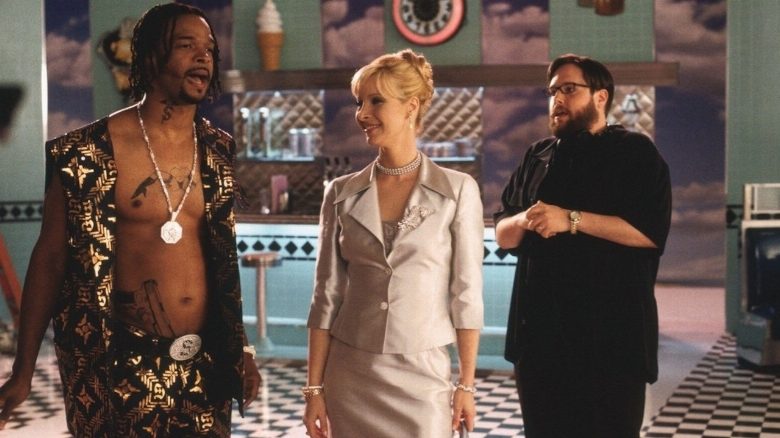
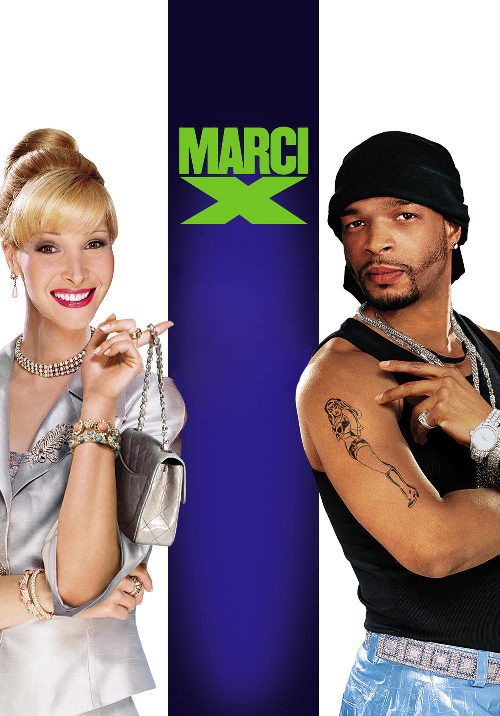
Marci Feld, a pampered Jewish-American Princess, doesn’t know about rap or the business world. But everything changes after rapper Dr. S releases a controversial CD for the hard-core hip-hop record label owned by Marci’s father. After a national protest breaks out to boycott the new CD and the record label, her father is hospitalized by a heart attack. Marci decides to step in to save his reputation and the family business by taming the raunchy rapper's wild bad boy image.
Satirical comedies often rely on the friction between diametrically opposed personality types, and Marci X leans heavily into this classic trope by thrusting a sheltered socialite into the volatile landscape of the early 2000s hip-hop industry. The film functions as a time capsule of a specific era in American pop culture, where the clash between corporate sensibilities and the raw, unfiltered expression of rap music served as a lightning rod for national debate. By centering the narrative on a character who is entirely out of her element, the story explores themes of public perception, corporate spin, and the inevitable evolution of controversial artistry. It is a lighthearted look at how image management can be both a farce and a necessity when a family legacy is placed squarely in the crosshairs of a media firestorm.
For fans of Indian cinema who appreciate the high-energy social commentaries found in Bollywood or Tollywood dramedies, this film offers a familiar dynamic of internal family conflict meeting external professional pressure. While the cultural backdrop is distinctly American, the underlying premise of a protected daughter forced to manage a chaotic situation to honor her father will resonate with global audiences who value character-driven growth. The performances by Lisa Kudrow and Damon Wayans anchor the film in a playful, banter-heavy style that prioritizes comedic timing over gritty realism. It serves as a fascinating study of how Hollywood once approached the collision of suburban expectations and urban musical movements, framing the tension through a lens of satirical exaggeration rather than social critique.
Viewers who enjoy lighthearted fish-out-of-water stories will likely find the comedic rapport between the leads to be the primary draw. The film does not attempt to provide a deep sociological analysis of the music industry; instead, it positions itself as a breezy, nostalgic romp that benefits from a strong ensemble cast. Those who appreciate the specific comedic rhythm of the early 2000s will find the stylistic choices and character archetypes particularly engaging. It is a film for anyone interested in seeing a classic odd-couple dynamic play out within the high-stakes environment of a music label, proving that even the most mismatched partners can find common ground when the pressure to succeed becomes absolute. Whether you are revisiting this era of comedy or approaching it for the first time, the production captures a peculiar moment in entertainment history where the lines between reputation and reality were constantly being blurred for the sake of the spotlight.
Cast(99)