

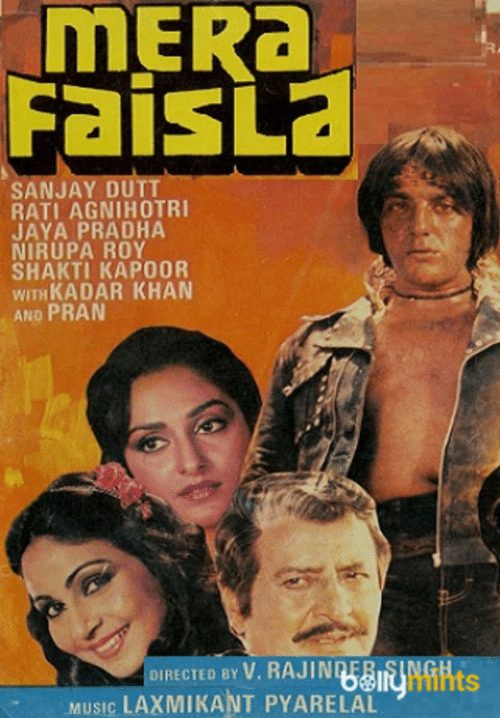
Mera Faisla(1984)
About Mera Faisla
Raj Saxena is in love with fellow collegian, Rati Verma, and both want to get married. Rati introduces Raj to her father, Major Verma, who, after finding out about Raj's background, decides to have nothing to do with him. For the Saxena family carries a stigma against their name - that of cowardice, betrayal, and corruption - which former Police Inspector Anand R. Saxena, Raj's dad, was accused of. Raj is humiliated by Verma's treatment, and swears to clear his father's name by joining the police force. What Raj does not know that in so doing, he has made himself a puppet in the hands of the very people who branded and stigmatized his father.
Venturing into the mid-eighties landscape of Indian cinema, Mera Faisla stands as a quintessential example of the era's obsession with familial honor, systemic corruption, and the redemptive arc of the angry young man. Directed by S V Rajendra Singh Babu, the film taps into the deep-seated cultural anxiety regarding institutional integrity and the weight of ancestral reputation. At its heart, the narrative follows a young man desperate to cleanse his father's sullied name after a high-stakes rejection from his beloved's family. While the premise may echo familiar tropes of the decade, it distinguishes itself by plunging its protagonist into a web of manipulation where the very path to justice becomes a potential trap, highlighting the precarious nature of morality in a landscape defined by power dynamics.
The film serves as a fascinating time capsule of eighties Hindi cinema, featuring a cast that perfectly encapsulates the period's star power. With Sanjay Dutt portraying the lead, the story leans into his screen persona of a man battling societal perceptions, while Jaya Prada brings a grounded emotional stakes to their romantic entanglement. The presence of iconic character actors like Kader Khan and Shakti Kapoor ensures that the film adheres to the dramatic intensity and antagonistic flair that audiences of the time demanded. For those interested in the evolution of the Indian police procedural and the classic hero journey, this production offers a look at how filmmakers navigated themes of betrayal and institutional rot long before the grittier, modern interpretations of the genre became the norm.
Viewers who enjoy high-stakes family dramas and narratives centered on clearing a tarnished legacy will likely appreciate the emotional momentum found here. It is a film for fans of vintage Bollywood storytelling, where the stakes are always personal and the resolution of a conflict is tied directly to the protagonist's ability to navigate moral ambiguity. By choosing to center the plot on a son's quest for vindication against a backdrop of deep-rooted corruption, the director creates a tension that is as much about psychological resilience as it is about physical confrontations. The movie remains a notable entry in the filmography of the lead actors, functioning as a bridge between the traditional melodramas of the past and the more complex, action-oriented narratives that would dominate the industry in the years that followed.



