
About Merge
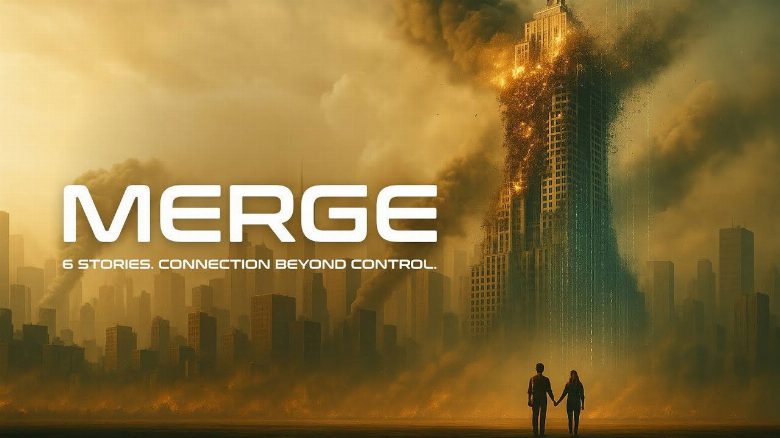
In a future where technology feels more human than ever, people confront love, loss, and identity as the boundaries between man and machine disappear.
The intersection of synthetic consciousness and human vulnerability has long been a fascination of speculative fiction, yet Merge approaches this familiar terrain with a uniquely haunting intimacy. Director Richard Fenwick constructs a vision of the near future where the digital and biological spheres are not merely colliding but actively bleeding into one another. While contemporary Indian cinema has recently leaned into high-concept mythological or historical spectacles, this English-language production offers a counterpoint that prioritizes psychological introspection over grand visual pyrotechnics. By stripping away the typical shiny aesthetics of futuristic settings, the film invites viewers to dwell in the quiet, unsettling spaces where our sense of self begins to fray under the weight of technological ubiquity.
At its core, the narrative explores the profound ache of human connection in an era where the lines defining a soul have become dangerously porous. Shoshana Rae Stark anchors the film with a performance that balances fragile humanity against the cold precision of the machines surrounding her. Alongside Cornelia Köndgen and Ashley Whelan, the cast navigates a tonal tightrope, shifting seamlessly between romantic longing and the visceral dread typically reserved for the horror genre. This genre-bending approach is particularly refreshing; it avoids the trap of becoming a sterile tech-thriller, choosing instead to focus on the emotional residue left behind when the objects of our affection are no longer purely organic.
Audiences who appreciate cerebral dramas that favor atmosphere over linear action will find much to admire here. It is a work for those who enjoy questioning the ethics of artificial evolution and the potential grief that accompanies such radical transitions. Fenwick displays a keen understanding of how to frame internal conflict through external environmental decay, creating a sensory experience that feels both grounded and alien. For fans of cinema that challenges the definition of personhood, this project represents a significant entry in the ongoing dialogue regarding our digital future. It is not designed for those seeking easy answers or comfort, but rather for the viewer willing to confront the uncomfortable reality that our tools may eventually become our mirrors, reflecting back versions of ourselves that we are not yet ready to accept.
Cast(21)