

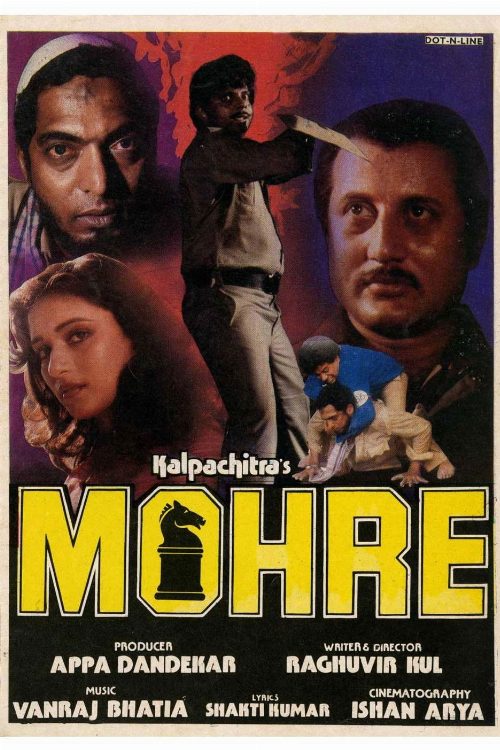
Mohre(1987)
About Mohre
Abdul, a depressed truck driver who wants to end his life, goes and meets other people like him when he sees an ad. He is unaware that the people behind the ad are escaped convicts.
Stepping away from the glitz of mainstream eighties Bollywood, Mohre serves as a fascinating relic of the parallel cinema movement that challenged conventional notions of heroism and morality in Indian film. Directed by Raghuvir Kul, the project occupies a gritty, stark space that feels miles away from the escapist musicals dominating the era. The story introduces us to Abdul, a weary man behind the wheel of a truck who finds himself pushed to the absolute edge of despair. His decision to seek out a mysterious group following a cryptic advertisement acts as the catalyst for a dark, psychological journey that forces the audience to question the nature of guilt and redemption. By grounding the narrative in the lives of the disillusioned and the fringe elements of society, the film avoids standard tropes, opting instead for a somber look at the human condition under extreme pressure.
The film is particularly notable for its ensemble, featuring early career performances from stars like Madhuri Dixit and the intense, unpredictable presence of Nana Patekar. For viewers who appreciate the raw, unvarnished storytelling found in the works of directors like Shyam Benegal or Govind Nihalani, Mohre offers a compelling case study in how low-budget Indian productions could leverage strong scripts and character-driven drama to create lasting tension. The inclusion of K.K. Raina and Sadashiv Amrapurkar further elevates the project, as they bring a sense of gravity to the unfolding mystery. Because the plot hinges on the interaction between a man seeking an exit from life and a collective of fugitives, the film functions more as a suspenseful character study than a typical crime thriller.
This production is tailor-made for cinephiles who value the evolution of Hindi cinema, specifically those interested in the transition period of the late eighties. It caters to an audience that prefers atmospheric storytelling over big-budget spectacles, focusing on the internal decay of its subjects rather than external action. Mohre remains a poignant example of how independent voices in the Indian film industry utilized the medium to explore existential dread and the blurring lines between the victim and the perpetrator. By placing these characters in a high-stakes environment where their pasts are hidden, the film manages to sustain a persistent feeling of unease. It is a mandatory watch for anyone tracking the early trajectory of its iconic leads or simply seeking a piece of Indian cinema that dares to prioritize psychological depth over commercial safety.



