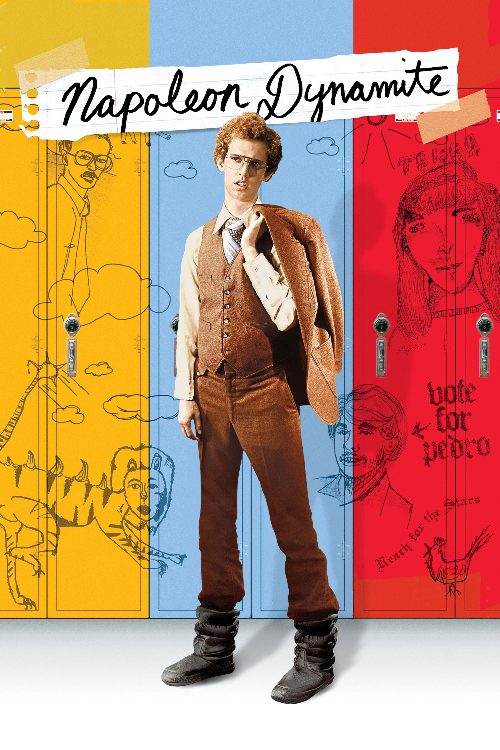
About Napoleon Dynamite
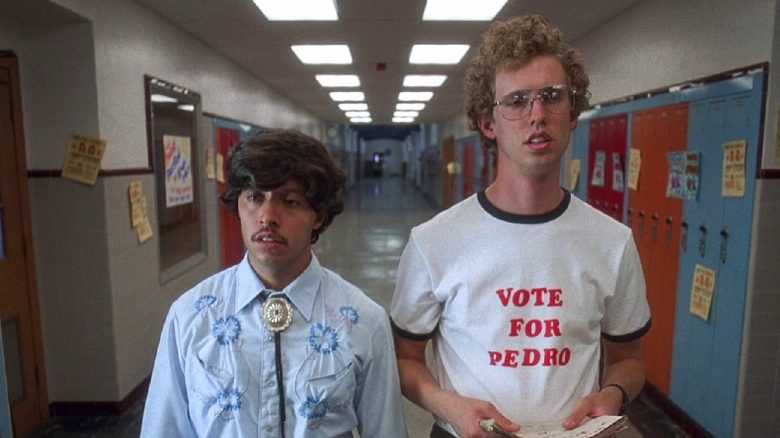
A listless and alienated teenager decides to help his new friend win the class presidency in their small western high school, while he must deal with his bizarre family life back home.
Few cinematic icons capture the awkward, stuttering pulse of adolescence with the same deadpan precision as the titular lead in this cult classic. While the vibrant, high-octane landscapes of contemporary Indian cinema often lean toward grand spectacles and mythological gravity, Napoleon Dynamite offers a refreshing pivot into the minimalist absurdism of suburban isolation. Set in a desolate pocket of rural Idaho, the film finds its rhythm not in traditional narrative arcs, but in the strange, microscopic details of a teenager navigating social invisibility. It is a masterclass in anti-comedy, stripping away the polished veneer typically associated with teen movies to reveal the genuinely bizarre textures of life on the fringes.
The story centers on a protagonist who moves through his high school days like a man out of time, wearing his social maladjustment as a defiant badge of honor. When an unlikely alliance forms with a quiet newcomer, the film transforms into an underdog tale defined by its refusal to be sentimental. Unlike the glossy coming-of-age dramas that dominate global streaming platforms, this production embraces the grit of thrift-store fashion and the boredom of small-town existence. For audiences familiar with the ensemble-driven character studies found in modern Malayalam or indie Hindi cinema, the film will feel like a precursor to the growing trend of hyper-regional, character-focused storytelling that prioritizes atmosphere over loud, forced plot developments.
Jared Hess, the visionary behind this project, demonstrates a remarkable ability to find humor in the mundane and the deeply eccentric. The film is perfectly tailored for viewers who appreciate subtle, dry wit and are tired of the predictable beats found in mainstream high school comedies. It demands patience from its audience, rewarding those who lean into its idiosyncratic pacing with moments of profound, unexpected hilarity. Whether it is the visual oddity of the household dynamics or the protagonist’s singular approach to self-expression, the film functions as a portrait of non-conformity that feels just as relevant today as it did decades ago. It serves as a reminder that the most memorable cinematic heroes are often those who are perfectly content to be entirely themselves, even when the rest of the world has no idea what to make of them.
Cast(37)