Off the Wall(1977)
About Off the Wall
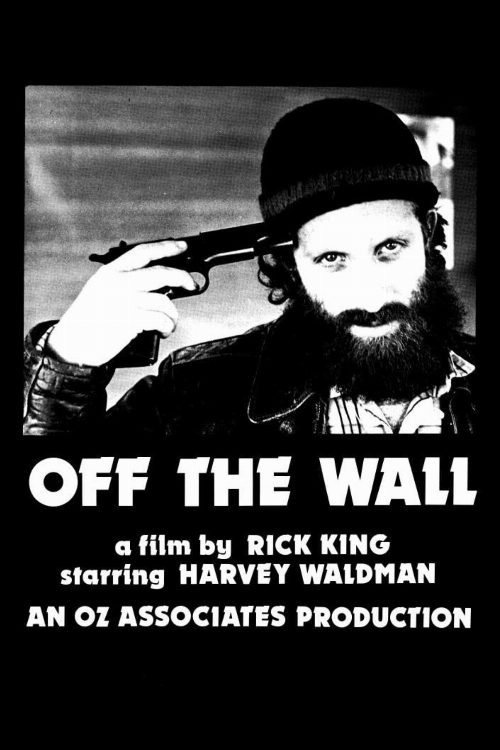
Pseudo-documentary showing footage shot by a television crew studying the life of a young, middle-class drifter named John Little, a fellow who describes himself as "the last of the hippies."
Stepping back into the landscape of late seventies independent cinema, Off the Wall captures a specific cultural inflection point that feels remarkably prophetic in our modern era of constant self-documentation. Rather than opting for a standard narrative structure, the film utilizes a mock-documentary format to trail the aimless wandering of a character who clings to the fading embers of counterculture idealism. While Indian cinema has recently seen a surge in meta-commentary and found-footage experiments, this 1977 production stands as a curious precursor to the candid, fly-on-the-wall storytelling that characterizes today’s most grounded character studies. The film avoids the polish of mainstream studio releases, instead favoring a raw and unvarnished glimpse into the life of John Little, a man struggling to reconcile his self-styled identity as a remnant of the hippie movement with the encroaching demands of middle-class mediocrity.
The brilliance of the film lies in its restraint, as it resists the urge to judge its subject or force a tidy moral resolution upon the audience. By positioning a television crew as the silent observers of Little’s daily existence, the director invites viewers to play the role of critic, questioning where the performance of the protagonist ends and his genuine disillusionment begins. It is a compelling experience for those who appreciate the slow-burn pacing of character-driven dramas or the dry wit found in observational comedies. Fans of films that prioritize atmosphere and psychological ambiguity over high-octane plot beats will find much to dissect here. It serves as a fascinating time capsule, documenting a transition period where the communal spirit of the sixties was rapidly giving way to the hyper-individualism that would define the following decade.
For the modern cinephile, this feature functions as a bridge between the avant-garde experiments of the early seventies and the polished mumblecore movement that would emerge decades later. While the cast features names that may not carry the household recognition of contemporary superstars, their performances are marked by a naturalism that remains genuinely impressive. The film does not attempt to explain away its subject’s eccentricities, which is exactly why it remains worth revisiting. It is best suited for viewers who enjoy peeling back the layers of a complex personality, making it a perfect recommendation for those who seek out cinema that challenges the traditional boundary between the observer and the observed. Even without the grand spectacles often associated with the global hits we cover at thebiographys.com, this work remains a distinct, thought-provoking entry in the history of independent film.