Orgies and the Meaning of Life(2008)
About Orgies and the Meaning of Life
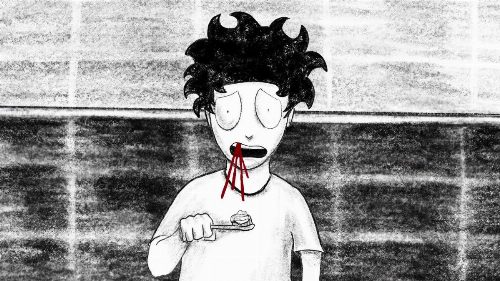
Baxter Goode is a man trying to find an ending to his book about a sex obsessed stick figure searching for a portal to the three dimensional world, as his father, a best selling Christian author, tries to stop him. His life is further complicated by his search for the one woman who will liberate him from his long addiction to orgy fantasies.
Venturing far from the polished aesthetics of contemporary mainstream cinema, Orgies and the Meaning of Life remains a peculiar artifact of the late two thousands that defies easy categorization. At its core, the narrative functions as a meta-textual exploration of creative paralysis, tracking a protagonist named Baxter Goode who finds himself caught between the competing pressures of his literary aspirations and the suffocating influence of his father. While the title might suggest a provocative romp, the film is actually a contemplative character study that juxtaposes the absurd, animated struggles of a two-dimensional stick figure against the messy, non-linear realities of human connection. It captures a specific moment in independent filmmaking where surrealism was frequently employed as a vessel to interrogate the existential angst of the modern male experience.
For audiences familiar with the diverse output of global cinema, this project occupies a space similar to the quirky, dialogue-heavy dramedies that occasionally bridge the gap between niche arthouse offerings and cult classics. The film leans heavily into the contrast between the protagonist’s intellectual fixation on his manuscript and his desperate, often misguided pursuit of romantic salvation. It is a work for those who appreciate experimental storytelling and are willing to engage with a plot that prioritizes thematic eccentricity over traditional narrative pacing. The presence of Peter Stormare adds a layer of seasoned gravitas to the proceedings, grounding the film’s more outlandish stylistic choices in a performance that demands attention even when the script veers into the abstract.
Ultimately, the movie serves as a reminder of how internal creative struggles often mirror our broader search for intimacy and purpose. By weaving together the father-son dynamic with the protagonist’s internal fantasies, the director crafts a portrait of a man attempting to reconcile his artistic vision with his personal demons. It stands out as a bold, if unconventional, experiment in tone that refuses to provide easy answers to the questions it poses. Viewers who enjoy films that challenge the boundaries of reality or those interested in the psychological underpinnings of artistic obsession will likely find this an intriguing, albeit challenging, watch. It is a testament to the idea that sometimes the most profound questions about our existence are best explored through the lens of our most private, and occasionally most bizarre, preoccupations.
Cast(15)