About Porgy and Bess in Wien
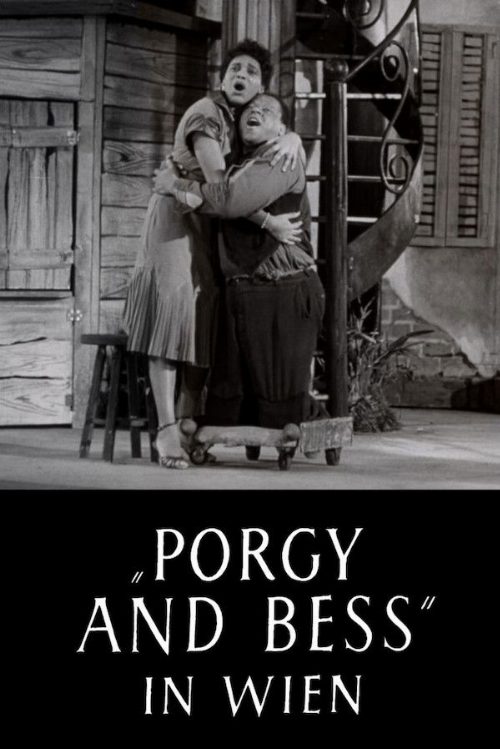
Featuring the opera star Leontyne Price, the concert baritone William Warfield, and the irrepressible jazz bandleader Cab Calloway, this virtually unknown short film documents the first stop on what would become a four-year US State Department–sponsored tour of the Everyman Opera Company's production of the Gershwin-Heyward opera Porgy and Bess.
Stepping back into the early fifties, Porgy and Bess in Wien offers a fascinating window into a pivotal moment where American cultural diplomacy met the sophisticated stage traditions of Europe. Directed by Willi Forst, this short film captures the initial, electric reception of the Everyman Opera Company as they brought George Gershwin’s iconic masterpiece to an Austrian audience. While many modern viewers associate the story primarily with its later cinematic iterations, this documentary functions as a time capsule, preserving the raw, stage-bound energy of a production that was tasked with representing American artistic prowess on the global stage. It highlights the intersection of jazz, opera, and international relations during a decade defined by the quiet intensity of the Cold War.
The film is anchored by a truly legendary ensemble, featuring the soaring vocals of Leontyne Price, the commanding presence of William Warfield, and the undeniable charisma of Cab Calloway. Their collective performance creates a unique tension between classical vocal rigor and the improvisational spirit of jazz, a synthesis that remains central to the enduring appeal of this specific opera. For those who enjoy archival music documentaries or are interested in the history of international touring productions, the film serves as a compelling look at the logistical and artistic challenges of transplanting such an American-centric narrative into the heart of Vienna. It is not merely a record of a performance but a testament to the power of artistic exchange as a form of soft power.
Today, this production stands out for its historical significance rather than just its technical execution. In the context of contemporary world cinema, where we often see the influence of cross-cultural collaborations in modern Indian and global industries, this 1953 documentary reminds us that the trend of taking regional or national stories on global tours has deep, complex roots. Enthusiasts of musical history will likely find the interplay between the cast members and the European setting particularly engaging, as it captures a moment where the barriers between high art and popular performance were being actively dismantled. Willi Forst manages to frame these larger-than-life personalities within the grandeur of the Austrian capital, ensuring that the legacy of the Everyman Opera Company remains accessible to audiences who appreciate the intersection of music, performance, and history. This short piece is an essential watch for anyone curious about how iconic American theater was once packaged, performed, and perceived far from its home soil.