
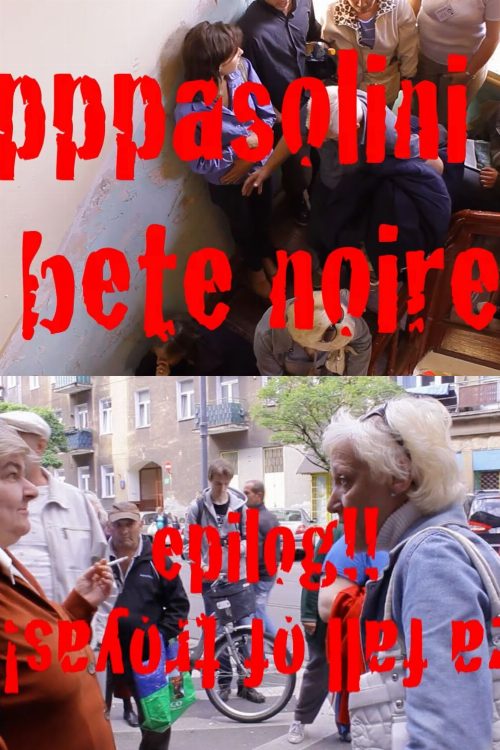
PPPasolini Epilog(2015)
About PPPasolini Epilog
In this hypnotic continuation of PPPasolini, filmmaker Małga Kubiak explores the dreams Pier Paolo Pasolini never got to realize. While the first film imagined his final hours in a surreal version of Stockholm, Epilog takes us further—into the world he longed to escape to. Pasolini had planned to move to Morocco, to live, write, and disappear from Italy’s gaze. But his death ended that story too soon. PPPasolini Epilog is the imagined afterlife of that plan: a haunting, sensual film filled with echoes of Petrolio, his unfinished novel, and reflections on exile, desire, and creation.
The cinematic landscape often struggles to capture the interiority of a genius, yet Malga Kubiak attempts exactly this through her dreamlike meditation on an unfulfilled migration. By focusing on the geographical shift Pier Paolo Pasolini contemplated before his life was abruptly severed, this film transcends the traditional boundaries of biographical storytelling. Rather than attempting a linear account of his existence, the project functions as an evocative hallucination, placing the intellectual weight of the unfinished novel Petrolio into a visceral, visual space. It is a bold departure from conventional dramas, opting instead for a sensory exploration of what might have occurred had the visionary writer successfully retreated to the landscapes of North Africa.
For those who follow the experimental fringes of global cinema, this work serves as an essential companion piece to the previous installment of Kubiak’s project. Where many films about historical figures get bogged down in period-accurate costumes and archival accuracy, this piece prioritizes the thematic resonance of exile and the artist’s desperate need to vanish from the public eye. It operates with a rhythm that mirrors the stream-of-consciousness style of Pasolini himself, making it a perfect match for viewers who appreciate non-narrative storytelling and intellectual abstraction. The casting choices, including performances by Emily Kuhnke and Thomas Goersch, help anchor the surreal imagery in a grounded, human desperation, ensuring the experience remains intimate despite its philosophical scale.
As Indian audiences continue to embrace crossover and independent international cinema, projects like this offer a refreshing contrast to the high-octane spectacles currently dominating the multiplexes in Mumbai or Hyderabad. It represents a growing appetite for auteur-driven narratives that challenge the audience to participate in the act of creation. Kubiak treats the camera like a paintbrush, layering textures and echoes of the past to create a portrait that feels less like a documentary and more like a fever dream. If you are a devotee of European art house traditions or simply curious about the intersection of literature and film, this evocative journey provides a haunting look at the paths left untraveled. It stands as a testament to the idea that an artist’s true legacy is found not in their completed works, but in the infinite possibilities of their imagination.