About Red Heat
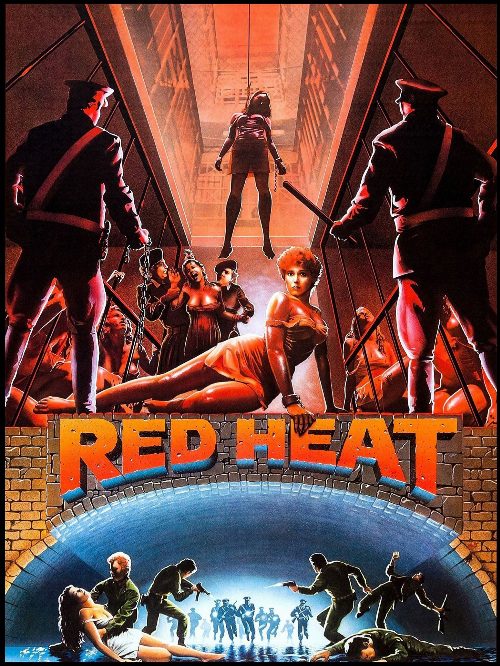
East Germans abduct a U.S. coed (Linda Blair) and throw her in a women's prison run by a brutal inmate (Sylvia Kristel).
The mid-eighties era of cinema was defined by a specific brand of geopolitical anxiety, and Red Heat emerges as a fascinating artifact of that Cold War paranoia. While modern global audiences are increasingly accustomed to the high-stakes political thrillers emerging from the Indian film industries, where cross-border espionage is often treated with grandiose flair, this classic thriller takes a decidedly more gritty and intimate approach. Rather than focusing on grand military maneuvers or spy networks, the narrative traps its protagonist within the claustrophobic walls of a penitentiary, turning a typical international relations dispute into a desperate fight for individual survival. It serves as a stark reminder of how American genre filmmaking once used the tension between Eastern and Western blocs as a backdrop for intense, contained survival stories.
For those who appreciate the evolution of the prison subgenre, the film offers a distinct look at how power dynamics are manipulated in restricted environments. The casting of Linda Blair brings a recognizable presence to the role of the innocent bystander caught in the gears of a machine far larger than herself, while Sylvia Kristel provides a chillingly authoritative counterpoint as the overseer of the facility. The contrast between these two figures anchors the narrative, ensuring that the stakes feel deeply personal even when the implications are global. It is a film that leans heavily into the tropes of the exploitation cinema of the time, yet it manages to maintain a sense of urgency that will appeal to viewers who enjoy high-tension escapes and psychological brinkmanship.
Industry observers often look back at this period as a time when Western thrillers were beginning to experiment with more visceral, localized storytelling, a trend that parallels the current shift in regional Indian cinema where directors are increasingly favoring grounded, realistic settings over expansive spectacles. Whether you are a fan of the classic Cold War aesthetic or simply interested in how filmmakers have historically navigated the intersection of political conflict and human misery, this production remains a compelling study in suspense. It functions as a time capsule, capturing the fears of a bygone decade through the lens of a brutal, unforgiving prison drama. Its reliance on atmosphere and performance over modern technical wizardry makes it a noteworthy addition to the filmography of the mid-eighties, appealing particularly to those who enjoy seeing how classic tropes were shaped by the geopolitical climate of their generation.
Cast(19)