About Reptilicus
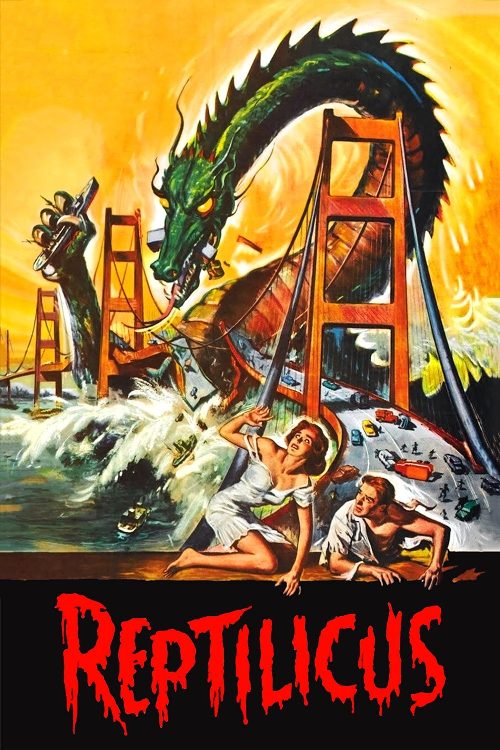
A portion of the tail of a prehistoric reptile is discovered in Denmark. It regenerates into the entire reptile, which proceeds to destroy buildings and property and generally make a nuisance of itself. It can fly, swim, and walk, and has impenetrable scales, which makes it difficult to kill.
The cinematic landscape of the early 1960s was defined by a fascination with the colossal, and Reptilicus stands as a curious artifact of international monster cinema. While global audiences often associate the giant creature genre with the high-budget spectacle of Japanese kaiju films, this Danish production offers a distinct European perspective on the trope. By centering the narrative on the accidental resurrection of an ancient predator discovered during mining operations, the film taps into mid-century anxieties regarding scientific interference and the unpredictable consequences of disturbing the natural order. It serves as a fascinating outlier, contrasting sharply with the regional storytelling traditions found in contemporary Indian cinema, where mythological epics and character-driven dramas often command the spotlight.
Viewers who enjoy the earnest, practical effects-heavy aesthetic of golden-age science fiction will find this movie particularly engaging. The premise hinges on the creature’s remarkable ability to regrow its entire biological mass from a single fragment, a concept that pushes the boundaries of the creature feature subgenre. Unlike the sleek, CGI-laden monsters of modern blockbusters, the antagonist here relies on traditional model work and set destruction, which lends the film a nostalgic, tactile quality. It is a quintessential piece of genre history for those who appreciate the campier side of monster movies and the experimental spirit that characterized non-Hollywood productions of the post-war era. The ensemble cast, featuring Bent Vejlby and Carl Ottosen, navigates the escalating chaos with a stoic dedication that anchors the outlandish plot.
For fans of global cinema, Reptilicus represents a unique moment where Western European studios attempted to emulate the success of monster-on-the-loose narratives. While it may lack the intricate cultural subtext often found in the Malayalam or Tamil industries, its value lies in its status as a piece of cross-cultural curiosity. It is positioned as a straightforward exercise in suspense and spectacle, designed to thrill audiences by placing a prehistoric nightmare in the heart of Copenhagen. Those who look for innovation in how different countries interpret the destructive power of nature will find this film a compelling study in international genre imitation. It is a testament to how universal the desire for grand-scale disaster storytelling truly was during this transformative decade in film history.
Cast(11)