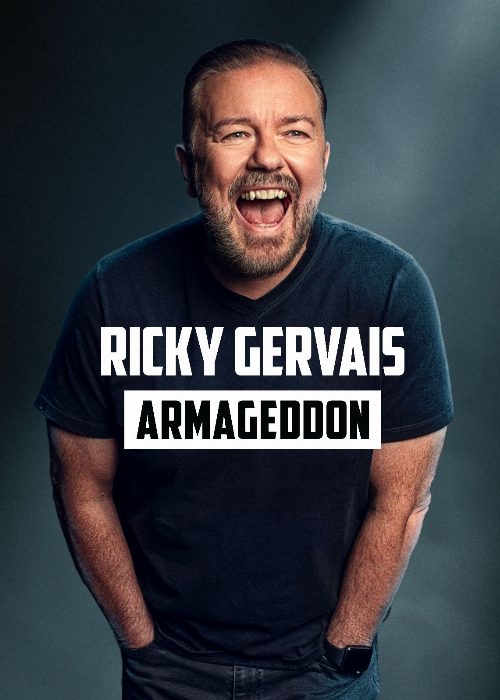
About Ricky Gervais: Armageddon
Ricky Gervais dishes out controversial takes on political correctness and oversensitivity in a taboo-busting comedy special about the end of humanity.
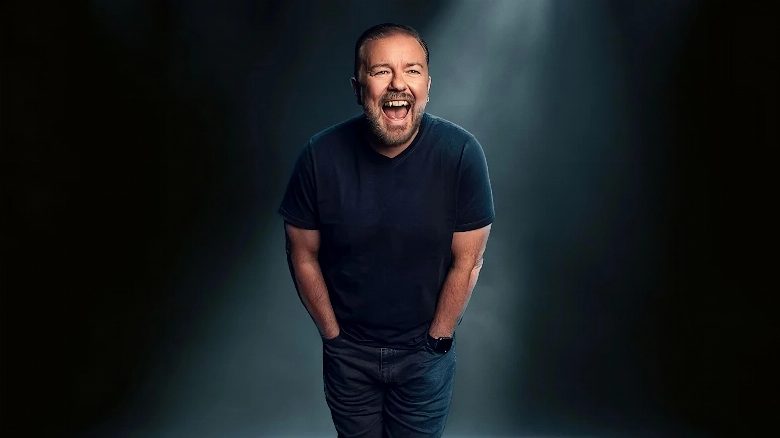
Few comedians possess the abrasive magnetism of Ricky Gervais, and his latest special, Armageddon, finds the British provocateur leaning fully into his signature brand of confrontational humor. While Indian cinema audiences are currently navigating a landscape defined by grandiose storytelling and regional pride, the global comedy circuit remains obsessed with the boundaries of free speech. Gervais positions himself as a lightning rod in this ongoing cultural debate, using the looming specter of societal collapse as a backdrop for his biting observations. By framing his set around the concept of humanity nearing its final curtain, he creates a sandbox where nothing is off limits, challenging the audience to laugh at the very things that usually prompt collective outrage.
For viewers accustomed to the more structured, character-driven narratives found in Hindi or Telugu cinema, this special offers a starkly different experience. It is a raw, stripped-back performance that relies entirely on the performer's ability to manipulate discomfort for comedic gain. Unlike the polished production values often seen in contemporary streaming hits, the focus here is strictly on the delivery and the audacity of the material. Gervais has built his entire career on the persona of the arrogant truth-teller, and in this outing, he pushes that archetype to its logical extreme. It is a masterclass in tone management, where the comedian constantly tests how much cynical wit a modern audience is willing to tolerate before shifting the mood.
This performance is tailored specifically for those who appreciate observational comedy that intentionally avoids the safety of political correctness. If you are a fan of the acerbic style that defined his earlier work in television, you will find a familiar, albeit more seasoned, edge in this hour-long set. It serves as a reminder of how the stand-up medium functions as a pressure valve for contemporary anxieties, forcing us to confront uncomfortable realities through the lens of absurdity. Whether you find his approach cathartic or grating, it is impossible to ignore the sheer precision with which he constructs his arguments. It is an essential watch for anyone following the evolution of global stand-up, serving as a polarizing yet undeniably crafted look at the current state of public discourse.