
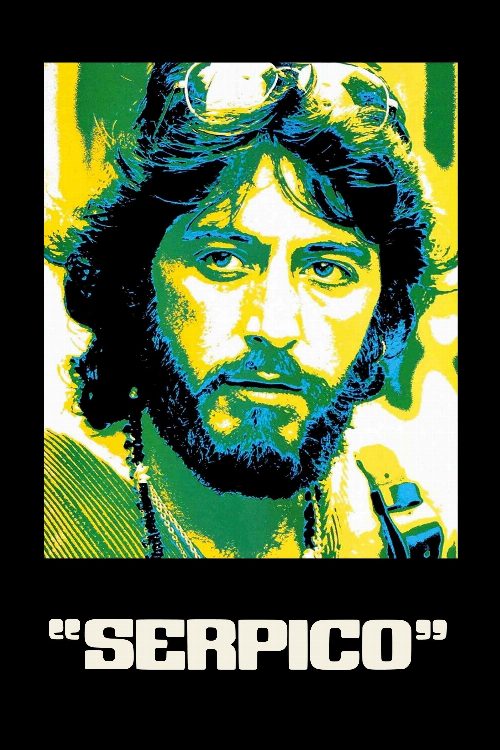
About Serpico
New York cop Frank Serpico blows the whistle on the rampant corruption in the force only to have his comrades turn against him.
Few performances in the history of American crime dramas carry the raw, untethered intensity that Al Pacino brings to his portrayal of an idealistic officer fighting a broken system from within. While the golden age of seventies cinema is often defined by its gritty urban landscapes and moral ambiguity, this film distinguishes itself by focusing on the crushing psychological weight of integrity in an environment built on graft. Unlike the stylized underworld epics that dominated the era, the narrative strips away the glamour of police work, presenting a claustrophobic reality where the greatest threat to a righteous man is not the criminal element, but the very colleagues who are sworn to protect him. It captures a specific moment in New York history, yet its exploration of systemic rot and institutional isolation remains strikingly relevant for contemporary audiences who enjoy the investigative rigor found in modern thrillers or even the high-stakes political dramas currently emerging from the Indian film industries.
Director Sidney Lumet masterfully constructs a world where the protagonist becomes an alien in his own precinct, a transformation that resonates with the current trend of anti-establishment narratives seen in hard-hitting Malayalam and Tamil cinema. Fans of intense character studies who appreciate the slow-burn tension of films like Visaranai or the moral complexity of Shool will find this essential viewing. The film does not rely on flashy shootouts to generate excitement; instead, it derives its power from the persistent, nerve-wracking pressure placed on a man who refuses to look the other way. By documenting the protagonist’s evolving appearance and demeanor, the film highlights how the pursuit of justice can physically and mentally dismantle an individual, making the viewer question the true cost of moral courage in a corrupt hierarchy.
This production serves as a masterclass for anyone interested in the evolution of the whistleblower trope in global film. It is positioned as a foundational text for viewers who prefer their crime dramas grounded in human stakes rather than spectacle. Al Pacino’s ability to convey exhaustion and defiance simultaneously provides a blueprint for the tortured lead characters often seen in today’s most acclaimed investigative dramas across India. Whether you are a student of classic Hollywood filmmaking or simply a fan of stories that pit a lone individual against a monolithic, broken organization, this film offers a haunting and deeply human experience that refuses to offer easy answers or comforting resolutions. It stands as a testament to the idea that sometimes the most dangerous act a person can commit is simply telling the truth.
Cast(65)