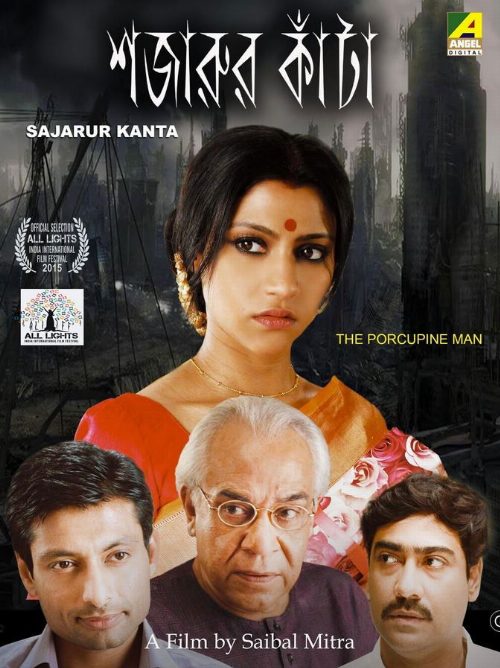
About Shajarur Kanta
Deepa and Debasish are married under unhappy circumstances, and their relationship proceeds as such, with little communication or connection between husband and wife. Meanwhile, there is a series of mysterious murders where the quill of a porcupine pierces the heart of the victim, killing them instantly. These two stories converge, requiring the presence of detective Byomkesh Bakshi to solve the mystery.
The quintessential Bengali detective Byomkesh Bakshi returns to the screen in Shajarur Kanta, a 2015 production that breathes new life into the iconic literary figure created by Sharadindu Bandyopadhyay. Director Saibal Mitra takes a sophisticated approach to this adaptation, moving away from simple procedural tropes to focus on the psychological tension inherent in the source material. By placing the legendary sleuth in the center of a bizarre string of homicides involving a signature porcupine quill, the film leans into the noir sensibilities that have long defined the darker corners of Bengali crime fiction. Dhritiman Chatterjee steps into the role with a seasoned gravity, offering a portrayal that prioritizes intellectual rigor and stoic observation over the more kinetic energy seen in other contemporary interpretations of the character.
At its heart, the narrative serves as a stark domestic drama that eventually intersects with a high-stakes criminal investigation. The story explores the fractured union of Deepa and Debasish, two individuals trapped in a marriage defined by silence and deep-seated emotional disconnection. This focus on the fragility of personal lives adds a layer of depth that elevates the film above a standard whodunit. It is an ideal watch for viewers who appreciate the slow-burn pacing of classic whodunits, where the atmosphere is just as crucial as the clues left behind at the crime scene. The film captures a specific regional mood, reflecting the intellectual heritage of Kolkata while maintaining a universal appeal for fans of period-accurate mysteries.
Saibal Mitra demonstrates a keen understanding of the source material, ensuring the visual language of the film matches the period setting without feeling like a museum piece. By balancing the cold, clinical nature of the murders with the suffocating reality of the protagonists fractured home life, the director manages to maintain a sense of unease throughout the runtime. Fans of Indian regional cinema who enjoy character-driven mysteries will find this project a compelling addition to the extensive Byomkesh filmography. It stands as a testament to the enduring power of the character, proving that even after decades of adaptations, there is still room for nuanced storytelling that prioritizes character psychology alongside the thrill of the hunt. This is a must-watch for those who prefer their detective stories served with a side of social commentary and emotional complexity rather than just action sequences.
Cast(12)