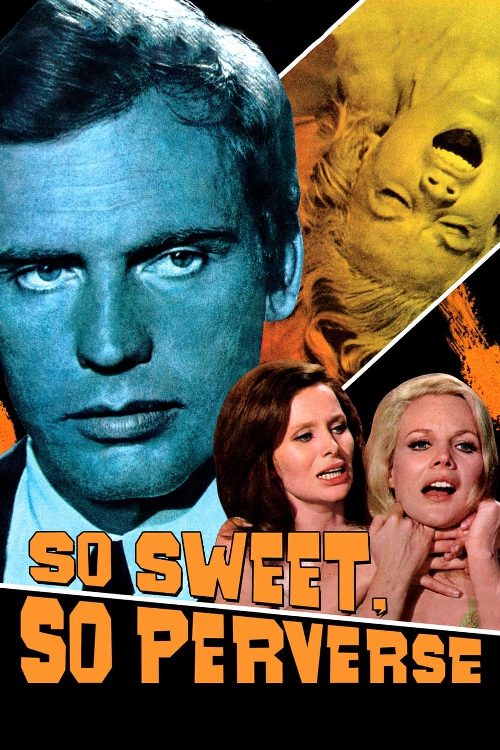
So Sweet... So Perverse(1969)
About So Sweet... So Perverse
An industrialist's affair with a troubled woman entangles him in a dangerous situation with her abusive boyfriend. His glamorous life spirals into unexpected peril.
Umberto Lenzi is widely celebrated for his contributions to the giallo movement, and So Sweet So Perverse stands as a quintessential example of the stylistic excess and psychological tension that defined Italian genre cinema during the late sixties. While the global film community often focuses on the heavy hitters of this era, this particular entry offers a fascinating bridge between traditional noir tropes and the lurid, fashion-forward aesthetic that would soon dominate the European thriller landscape. The narrative centers on a wealthy businessman who finds his meticulously constructed life unraveling after an extramarital liaison with a woman trapped in a volatile relationship. It is a classic setup of domestic displacement, where the protagonist realizes that his attempts to rescue a mysterious stranger have inadvertently placed him at the center of a lethal game of manipulation.
For viewers accustomed to the high-stakes melodramas prevalent in contemporary Indian cinema, such as the tense psychological thrillers coming out of the Malayalam or Hindi industries, this film provides a compelling look at the roots of modern suspense. The storytelling prioritizes atmosphere and visual obsession over rapid-fire editing, creating a sense of dread that feels remarkably modern despite its age. Carroll Baker brings a magnetic, fragile intensity to the screen, perfectly capturing the archetype of the femme fatale who is as much a victim of circumstance as she is a catalyst for chaos. The interplay between the protagonists mirrors the kind of moral ambiguity often explored in modern neo-noir, where the line between savior and accomplice becomes dangerously blurred.
This film is an essential watch for cinephiles who appreciate the evolution of the mystery genre and want to see how European directors leveraged lighting, costume, and architectural space to enhance narrative dread. It lacks the explosive action sequences found in popular South Indian commercial cinema, opting instead for a slow-burn approach that relies on the shifting power dynamics between its three main characters. By stripping away the comfort of the familiar, Lenzi forces the audience to question the motivations of every individual on screen. It is an ideal pick for those who enjoy character-driven dramas that refuse to offer easy answers, providing a masterclass in how to sustain tension through subtext and unspoken threats. Fans of classic suspense will find the deliberate pacing refreshing, as it allows the dark, intricate web of the plot to tighten around the audience with surgical precision.
Cast(17)