About State of the Union
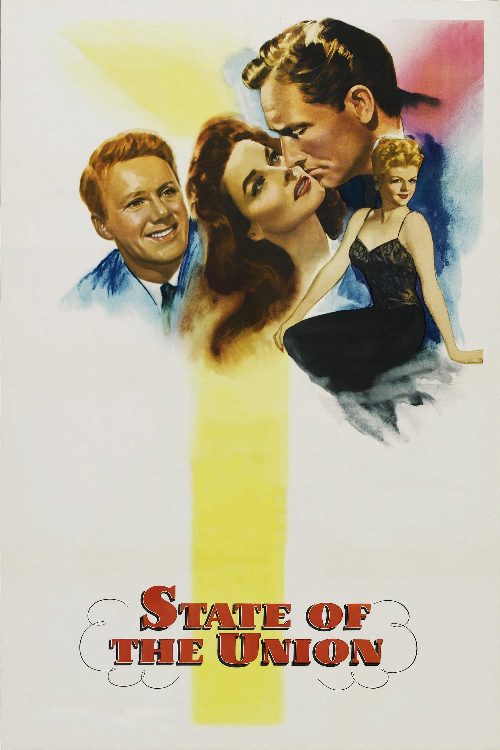
An industrialist is urged to run for President, but this requires uncomfortable compromises on both political and marital levels.
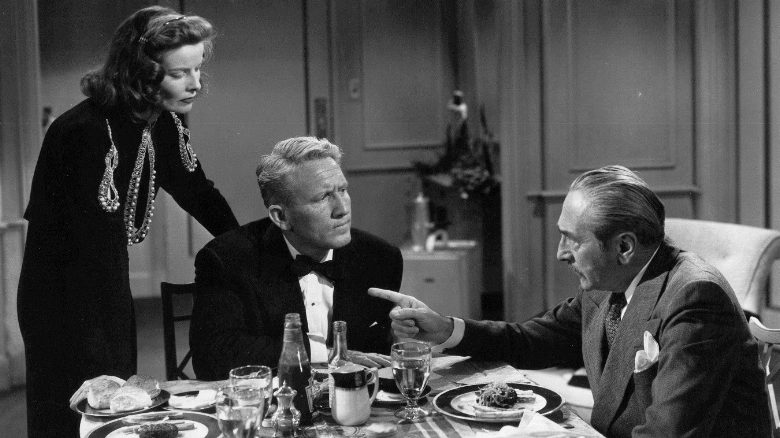
Few films from the late nineteen forties capture the frantic intersection of vanity and governance quite like State of the Union. While contemporary audiences often associate the era with noir aesthetics or sweeping musicals, this production leans into the sharp, cynical wit of political maneuvering. It serves as a fascinating time capsule, illustrating how the machinery of public office requires a candidate to balance their personal moral compass against the demands of party strategists and public perception. By placing an industrialist at the center of this storm, the narrative explores the inherent friction between private success and the performative nature of campaigning, a tension that remains remarkably relevant in today’s polarized media climate.
The film functions as a precursor to the modern political satire, highlighting how the quest for power frequently demands the sacrifice of authenticity. For viewers who enjoy classic Hollywood dramas that prioritize dialogue and ideological conflict over spectacle, this picture provides a compelling look at the behind the scenes dealmaking that defines democratic elections. It belongs to a tradition of character driven cinema where the stakes are elevated not by physical action, but by the potential collapse of a marriage and the corrosion of a man's principles. The performance of the lead cast captures the exhaustion of navigating a public image, making it an essential watch for those interested in the history of institutional critique in American film.
Beyond its historical value, State of the Union benefits from a pacing that mirrors the breathless quality of a primary race. It is positioned as a sophisticated study of how ambition can distort an individual's worldview. While the setting is mid-century, the themes regarding the commodification of personality and the manipulation of the electorate feel strikingly current. Those who appreciate the sharp tongue of classic screwball comedies mixed with the weight of dramatic realism will find much to admire here. It is a thoughtful examination of what is truly lost when a person decides to trade their private life for the hollow prestige of the executive branch, marking it as a significant, if sometimes overlooked, entry in the golden age of studio filmmaking.
Cast(32)