
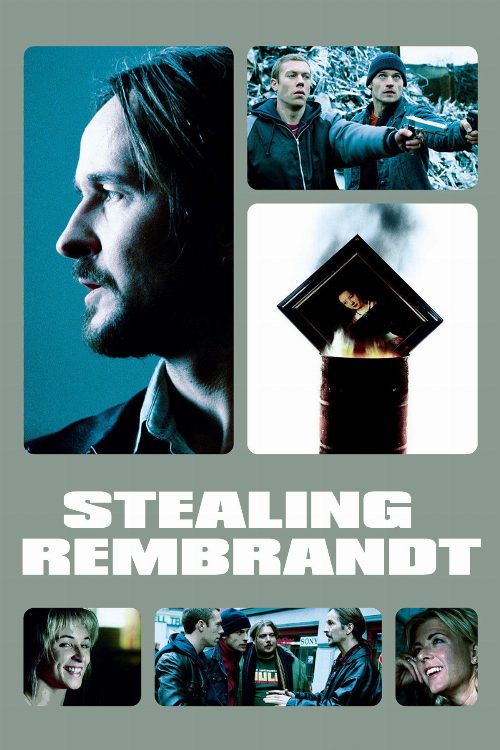
About Stealing Rembrandt
Two bumbling scrap metal thieves - father and son - steal the wrong painting during a museum heist. The painting turns out to be the only original Rembrandt painting in Denmark, and all hell breaks loose. What do you do when you've got Interpol, the Danish police and the entire Danish underworld on your heels? And who was this Rembrandt guy anyway?
The heist genre often leans into the slick sophistication of mastermind criminals, but Stealing Rembrandt takes a refreshing detour into the chaotic world of amateur incompetence. Directed by Jannik Johansen, this 2003 Danish production subverts the high-stakes thrills of international art theft by placing the fate of a priceless masterpiece in the hands of two profoundly inept scrap metal collectors. While global audiences might be more accustomed to the high-octane action sequences found in contemporary South Indian cinema or the polished crime dramas of Bollywood, this film offers a distinct Nordic flavor of dark, dry humor that relies on character missteps rather than technological gadgetry. It is a masterclass in how to build tension not through the competence of the protagonists, but through their desperate, fumbling attempts to survive a situation they never intended to create.
The narrative momentum builds as the father-son duo realizes their accidental acquisition has drawn the unwanted attention of both law enforcement agencies and the dangerous criminal underbelly. This dynamic creates a frantic race against time that feels surprisingly relatable, tapping into the universal anxiety of being in way over one's head. Fans of ensemble comedies who appreciate ensemble casts working with sharp, witty scripts will find plenty to enjoy here. The presence of Nikolaj Coster-Waldau, long before his rise to global fame, provides an interesting glimpse into the early talent pool of the Danish industry, showcasing the nuanced performance style that characterizes much of the country's output. The film manages to balance the absurdity of its premise with a grounded sense of place, making the stakes feel tangible even when the comedy is at its most frantic.
For viewers who typically gravitate toward the vibrant, high-energy storytelling found in Telugu or Hindi hits, Stealing Rembrandt serves as an engaging palate cleanser. It captures a specific sensibility where the comedy is rooted in social awkwardness and the sheer unpredictability of human greed. The film does not demand that you take its criminal elements entirely seriously, yet it provides enough narrative urgency to keep the viewer invested in the survival of its hapless leads. By focusing on the intersection of cultural heritage and petty crime, the director crafts a story that is as much about the absurdity of value as it is about the mechanics of a heist. It is a quintessential recommendation for anyone looking to explore European cinema through a lens that prizes character-driven hilarity over the polished tropes of traditional action blockbusters.
Cast(34)