
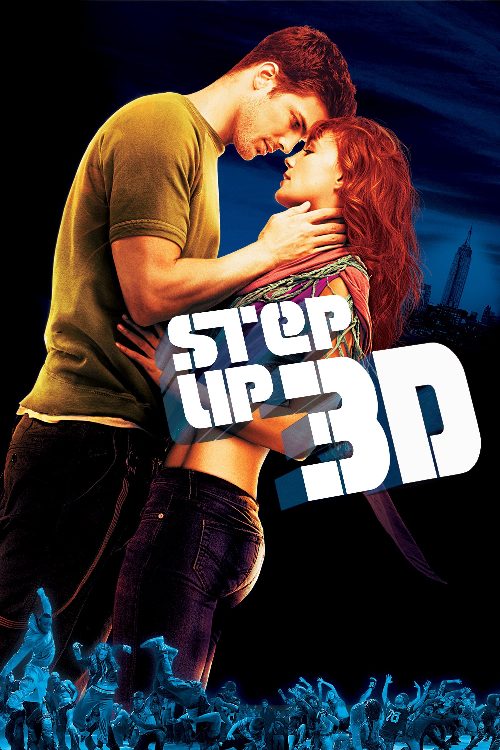
About Step Up 3D
A tight-knit group of New York City street dancers, including Luke and Natalie, team up with NYU freshman Moose, and find themselves pitted against the world's best hip-hop dancers in a high-stakes showdown that will change their lives forever.
The pulse of the urban dance floor serves as the heartbeat of this kinetic production, which captures the raw electricity of the New York City underground scene. While global cinema has seen various attempts to bottle the spirit of competitive movement, this particular installment leans heavily into the technical prowess of street culture. By focusing on a collective of performers who treat the concrete jungle as their personal stage, the film bridges the gap between gritty realism and the polished aesthetics of a big-budget spectacle. It captures a specific moment in pop culture history where the convergence of athletic discipline and creative expression became a dominant force in mainstream entertainment.
For fans of Indian cinema who appreciate the high-energy choreography seen in major Telugu or Tamil dance-centric features, the appeal here is immediate. The narrative trajectory follows a classic underdog structure, reminiscent of regional hits where a ragtag group must overcome internal friction and external pressure to prove their worth on a global platform. It is a story about finding family within the art form, shifting the focus from individual glory to the power of the ensemble. Viewers who enjoy films that prioritize visual storytelling over heavy dialogue will find the rhythmic pacing and innovative camera work particularly engaging. It is an exploration of identity through motion, illustrating how young dancers utilize their bodies to navigate the challenges of transitioning into adulthood.
The director leans into the strengths of the cast, allowing the choreography to do much of the heavy lifting. By gathering a group of performers who actually possess deep roots in the professional dance circuit, the production achieves a level of authenticity that often eludes similar projects. While the plot beats remain familiar to those versed in the tropes of the genre, the sheer spectacle of the sequences provides a compelling reason to watch. This is an ideal pick for audiences looking for a high-octane experience that celebrates the grind of rehearsal and the euphoria of performance. It remains a notable entry in the dance-drama canon, serving as a time capsule for the aesthetic trends that defined the late two thousands and highlighting the enduring popularity of narratives centered on passion and persistence.
Cast(110)