

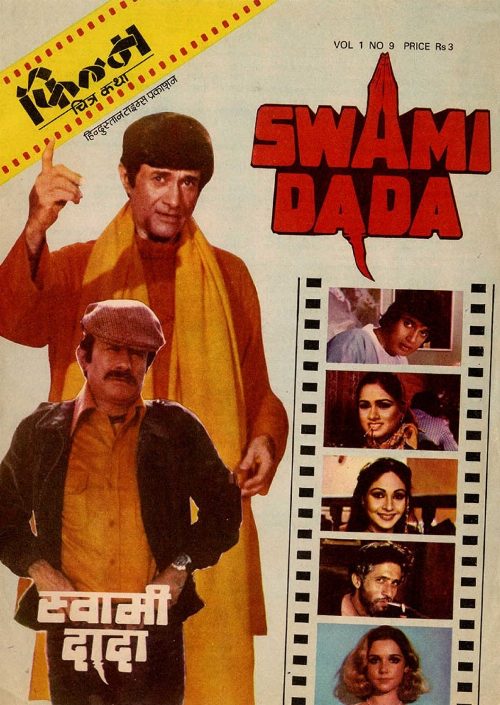
Swami Dada(1982)
About Swami Dada
Hari Mohan is a saintly person who organizes Hindu prayers and discourses in a warm and welcoming atmosphere. He is called "Swami Dada" by everyone. He has many followers, and devotees who throng in large numbers to hear his sermons. What they do not know that Hari Mohan is a professional thief, and is now conspiring with a young woman, and a group of orphaned children to steal the temple jewellery.
Few films from the early eighties capture the distinct tonal shifts of Hindi commercial cinema quite like Swami Dada. This project stands out as a fascinating character study wrapped in the guise of a crime caper, anchored by the magnetic screen presence of Dev Anand. While the era was defined by high-octane action and melodrama, this story opts for a more curious central conceit, focusing on a man who commands deep religious reverence from his community while harboring a secret life as a cunning mastermind. The juxtaposition of spiritual discourse with the mechanics of a heist creates a unique tension that separates it from the standard vigilante dramas prevalent in the Bollywood landscape of that decade.
The ensemble cast serves as a veritable time capsule of Indian cinema talent, showcasing a blend of seasoned performers and rising stars. Seeing Naseeruddin Shah share the screen with Mithun Chakraborty and a young Jackie Shroff provides a masterclass in contrasting acting styles, ranging from the grounded, method-driven approach of the parallel cinema icons to the emerging charisma of the future action heroes. For viewers who appreciate the evolution of the Hindi film industry, this movie acts as a bridge between the traditional storytelling of the seventies and the stylistic experimentation that would define the late eighties. The inclusion of Padmini Kolhapure adds a necessary emotional weight, ensuring that the narrative remains tethered to human stakes rather than relying solely on the technicalities of the theft plot.
Audience members drawn to complex protagonists who exist in moral gray areas will likely find the most enjoyment here. It is not merely a tale of transgression but an exploration of identity and the performance of virtue in a public sphere. The film appeals to those who enjoy classic heist tropes seasoned with the specific cultural flavors of the era, including its musical numbers and distinct social commentary. By examining how a community perceives a figurehead, the director crafts a narrative that remains relevant even decades later. Whether you are a dedicated fan of the cast members or a student of Indian film history, this work remains a notable entry in the filmography of a legendary filmmaker, offering a blend of suspense and character-driven drama that is rarely replicated in modern mainstream productions.



