The Brig(1964)
About The Brig
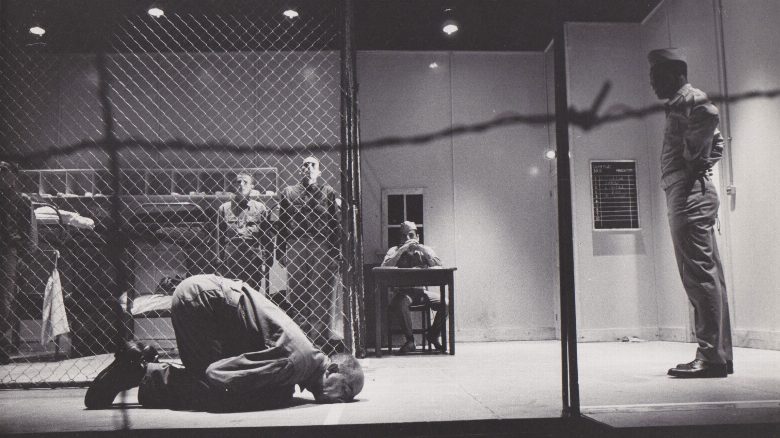
Jonas Mekas’s film captures The Living Theatre’s stage production of The Brig, an unflinching portrait of life inside a U.S. Marine Corps jail in Japan in 1957. Over the course of a single day, prisoners endure relentless drills, abuse, and dehumanization, exposing the brutality of military discipline with stark immediacy.
Cinema often functions as a mirror to institutional cruelty, yet few films manage to capture the claustrophobic intensity of state-sanctioned discipline as effectively as Jonas Mekas achieved with The Brig. By documenting the avant-garde performance by The Living Theatre, the film transcends the traditional boundaries between stage and screen. It presents a raw, unvarnished look at the psychological and physical attrition suffered by inmates within a military detention facility. While modern audiences raised on the polished aesthetics of contemporary war dramas might be accustomed to sweeping battle sequences, this work chooses a different path, focusing instead on the repetitive, soul-crushing routine of confinement that turns human beings into mere cogs within a rigid system.
For viewers accustomed to the vibrant, often melodramatic storytelling found in regional Indian cinema, The Brig offers a starkly different experience that strips away all artifice. There is no romanticized struggle or heroic redemption arc here; instead, the film demands a high level of patience and emotional resilience. Its significance lies in its historical commitment to capturing a specific style of performance art that emphasizes the visceral reality of suffering. It is a grueling watch, intentionally designed to make the audience feel the confinement of the cells and the exhaustion of the prisoners. Those who appreciate experimental filmmaking or are interested in how the medium of cinema can serve as a vessel for radical theatrical expression will find this an essential piece of archival history.
The choice to film this production as a direct reflection of the stage experience emphasizes the director’s interest in the immediacy of the moment. By stripping away the comfort of cinematic cues, the film forces an uncomfortable proximity to the abuse depicted. It serves as a reminder that the most profound critiques of authority often emerge from spaces where the camera refuses to look away. This is not entertainment in the traditional sense, but rather a document of endurance that challenges the viewer to confront the mechanisms of control. Whether one is a scholar of experimental film or a cinephile looking to broaden their understanding of how global directors have utilized the camera to document the human condition, The Brig stands as a harrowing, uncompromising example of how art can expose the darkest corners of institutional life.
Cast(17)