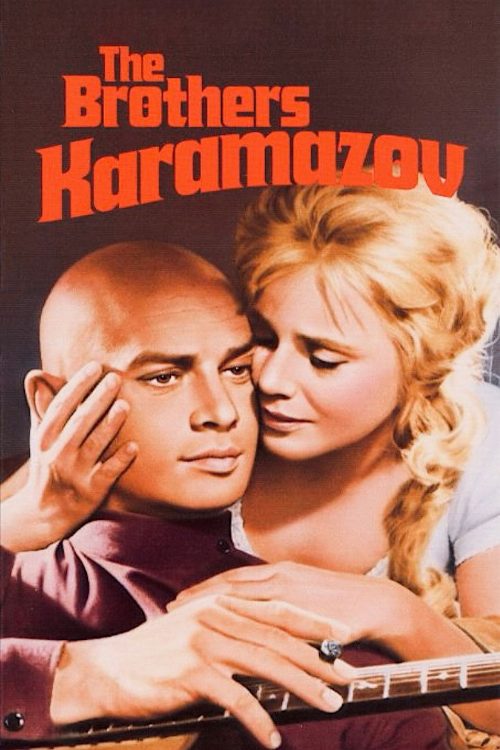
About The Brothers Karamazov
Ryevsk, Russia, 1870. Tensions abound in the Karamazov family. Fyodor is a wealthy libertine who holds his purse strings tightly. His four grown sons include Dmitri, the eldest, an elegant officer, always broke and at odds with his father, betrothed to Katya, herself lovely and rich. The other brothers include a sterile aesthete, a factotum who is a bastard, and a monk. Family tensions erupt when Dmitri falls in love with one of his father's mistresses, the coquette Grushenka. Two brothers see Dmitri's jealousy of their father as an opportunity to inherit sooner. Acts of violence lead to the story's conclusion: trials of honor, conscience, forgiveness, and redemption.
Dostoyevsky’s towering literary masterpiece found a surprisingly kinetic and visually lush life in the 1958 screen adaptation directed by Richard Brooks. While modern audiences often associate sprawling family sagas with the intense emotional stakes found in contemporary Indian cinema, this classic Hollywood production captures a similar essence of domestic volatility and generational conflict. The narrative centers on a patriarch whose grip on his fortune and his children creates a pressure cooker of resentment. The dynamic between the brothers, each representing a distinct philosophical archetype, serves as the engine for a story that explores the thin line between moral decay and spiritual salvation. By focusing on the volatile relationship between the eldest son and his father, the film taps into universal themes of inheritance, honor, and the heavy burden of legacy that resonate just as strongly in the landscape of global drama today.
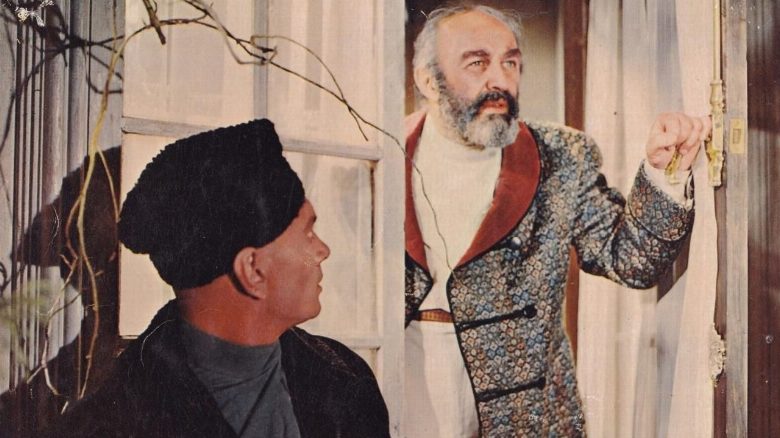
The casting choice of Yul Brynner as the tempestuous Dmitri brings a magnetic, high-octane energy that balances William Shatner’s nuanced turn as the more contemplative brother. For viewers who appreciate the layered storytelling found in modern Telugu or Malayalam character-driven dramas, this film offers a fascinating look at how mid-century studios handled complex psychological source material. The production design evokes the rigid social strata of nineteenth-century Russia, yet the core of the conflict feels remarkably contemporary. It is a work for those who enjoy slow-burn explorations of conscience and the fallout of impulsive desire. Rather than relying on simple archetypes, the film invites the audience to weigh the merits of each sibling’s worldview, making it an essential watch for fans of intense, dialogue-heavy ensemble pieces.
Richard Brooks manages to distill a dense, multi-layered novel into a coherent cinematic experience without stripping away the philosophical weight that makes the source material legendary. The film remains a benchmark for how to adapt literature that is famously preoccupied with the duality of human nature. By anchoring the narrative in the visceral tensions of a single household, the director ensures that the stakes remain high and personal throughout. This is not merely a period piece but a sharp investigation into the motives that drive men to extremes, whether fueled by greed, devotion, or a desperate need for recognition. Anyone with an interest in the evolution of dramatic structure across international cinema will find this portrayal of the Karamazov family to be an enduring study in how personal betrayals can shatter the foundations of a home.
Cast(22)