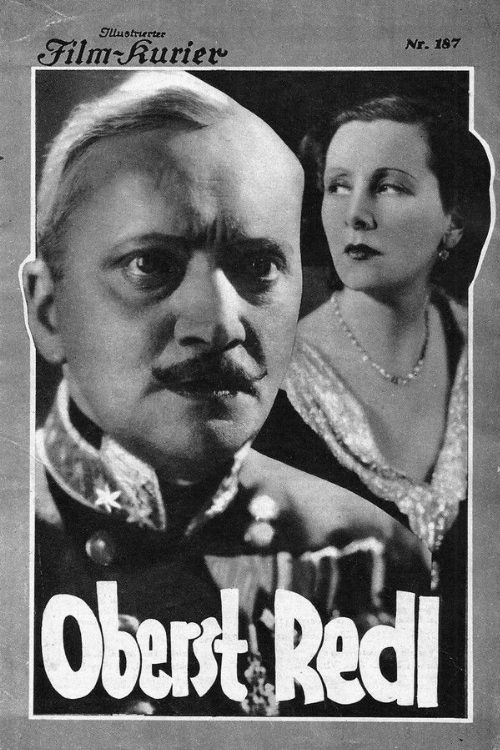
About The Case of Colonel Redl
Based on the short story "Der Fall des Generalstabschefs Redl" by Egon Erwin Kisch. Alfred Redl, a colonel on the Austrian General Staff, leads an extravagant private life. No one suspects that in reality he is passing information to Russian spies. Alternate-language version of "Aféra plukovníka Rédla" (1931).
Decades before the modern obsession with high stakes espionage thrillers, the 1931 drama The Case of Colonel Redl captured the haunting duality of a man operating within the rigid hierarchies of the Austrian military. While many period pieces of the early sound era leaned into theatrical artifice, this production offers a stark character study that remains remarkably grounded in the moral ambiguity of its protagonist. By focusing on the internal fracturing of a high-ranking officer who leads a facade of luxury while secretly compromising his nation for foreign interests, the film transcends its historical setting to explore the universal tension between public duty and private desperation. It serves as a compelling bridge between early European political cinema and the noir sensibilities that would eventually define mid-century suspense narratives.
For audiences accustomed to the sprawling epics of contemporary Indian cinema or the fast-paced political dramas of the current global streaming landscape, this film provides an intriguing glimpse into the roots of the spy genre. Its pacing is methodical and deliberate, inviting the viewer to scrutinize every interaction for signs of betrayal rather than relying on explosive action sequences. It is an essential watch for cinephiles who appreciate the evolution of psychological storytelling, particularly those who enjoy seeing how filmmakers in the early thirties managed to build palpable anxiety through shadow, silence, and subtle performance. The work serves as a reminder that the most compelling tales of espionage are rarely about gadgetry or combat, but rather the crushing weight of a double life.
The film is particularly significant for its place within the multilingual production trends of the interwar period. By existing as an alternate version of a larger project, it highlights the technical and creative ingenuity of studios attempting to reach diverse European audiences during a time when dubbing technology was still in its infancy. For those who track the history of how stories are adapted across borders, this production acts as a fascinating case study in artistic translation. Whether one is a scholar of classic European drama or simply a fan of complex moral dilemmas, the film remains a potent example of how to frame a historical tragedy with enough humanity to ensure the colonel remains a figure of intrigue rather than just a historical footnote. It stands as a testament to a time when cinema was just beginning to grasp the full potential of the spy narrative as a vehicle for deep social and personal introspection.
Cast(16)