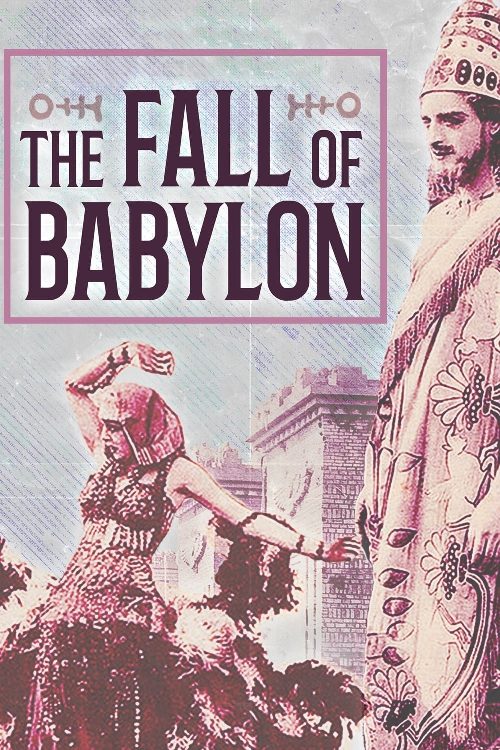
The Fall of Babylon(1919)
About The Fall of Babylon
After the relatively low box office takings of 'Intolerance', D. W. Griffith would revisit his epic film three years later by releasing two of the film's interlocking stories as standalone features, with some new additional footage. The first of the two was 'The Fall of Babylon', which depicts the conflict between Prince Belshazzar of Babylon and Cyrus the Great of Persia.
Cinema history is often defined by the ambitious projects that leave directors reaching for more than the medium can hold, yet few filmmakers have mastered the art of recycling their own grandeur quite like D. W. Griffith. By 1919, the director sought to breathe new life into his gargantuan experiment Intolerance by isolating its most spectacular historical sequences. The Fall of Babylon stands as a fascinating artifact of early twentieth century production, where the sheer weight of historical spectacle was repurposed to stand on its own feet. Rather than viewing this as a simple re-release, it serves as a testament to the era's obsession with ancient mythologies and the technical prowess required to stage such massive conflicts on a stage that predated modern visual effects.
The narrative pits the opulent civilization of Babylon against the relentless expansion of the Persian Empire, focusing on the inevitable clash between Prince Belshazzar and Cyrus the Great. While modern viewers accustomed to the rapid pacing of contemporary Indian epics like Baahubali or RRR might find the deliberate rhythm of silent era storytelling challenging, the film remains a vital piece of the cinematic puzzle. It highlights the transition from the theatrical staging of the nineteenth century to the sophisticated montage techniques that would eventually define global filmmaking. For those interested in the evolution of the blockbuster, this standalone cut provides a concentrated dose of the visual excess that once defined Hollywood ambition.
This production is best suited for students of film history and those who appreciate the foundational aesthetics of the silent era. It offers a rare glimpse into how early studios managed their intellectual property, essentially creating a directors cut decades before the term became industry standard. With a cast led by Seena Owen and Constance Talmadge, the performances lean into the expressive, grand gestures required to convey high-stakes drama without the aid of spoken dialogue. As audiences today continue to engage with mythological retellings and grand-scale historical dramas across Hindi, Telugu, and Tamil industries, watching The Fall of Babylon provides a unique perspective on the roots of the epic genre. It is a stark reminder that the desire to capture the rise and fall of civilizations has been a driving force for visionary filmmakers since the very inception of the moving image.