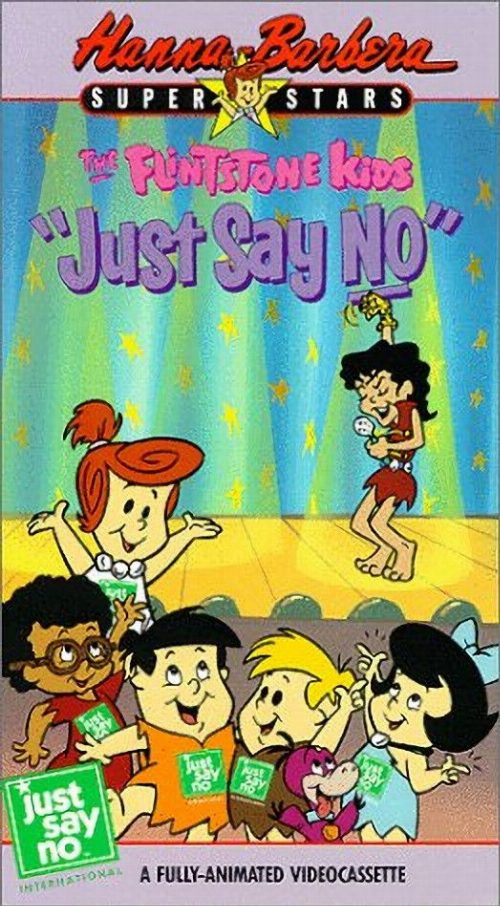
The Flintstone Kids' "Just Say No" Special(1988)
About The Flintstone Kids' "Just Say No" Special
A special that shows the young Flintstones trying to raise money so they can go to a concert. The story takes a turn when older kids try to push drugs on them.
Decades before the modern era of prestige animation, television producers were deeply invested in weaving moral lessons directly into the Saturday morning cartoon landscape. The Flintstone Kids Just Say No Special stands as a curious artifact from a time when the bedrock of prehistoric comedy was temporarily repurposed to address the urgent social anxieties of the late eighties. While contemporary audiences often look toward the evolving narratives of the Telugu or Malayalam industries for complex social commentary, this specific production captures an American cultural moment where iconic characters were leveraged to tackle the burgeoning anti-drug movements of the Reagan administration. It reflects a standard operating procedure for the era, placing familiar faces in scenarios that felt decidedly more grounded and didactic than their usual slapstick routines.
The premise follows a familiar trajectory for the characters, focusing on the youthful versions of Fred, Barney, and their friends as they hatch a scheme to finance their dream of attending a live music event. However, the narrative pivots sharply from lighthearted hijinks to a cautionary tale, introducing older antagonists who attempt to coerce the group into risky behaviors. By transplanting these ancient icons into a setting that mirrors the peer pressure dynamics of an eighties high school, the special attempts to bridge the gap between harmless prehistoric antics and the very real dangers facing children in urban centers. It is a stark example of how animation was once used as a direct conduit for public service messaging, prioritizing a clear ethical takeaway over the whimsical storytelling that typically defined the franchise.
Viewers who enjoy exploring the history of television media and the evolution of children's programming will find this special particularly illuminating. It serves as a time capsule for those interested in the history of the Hanna Barbera studio and the ways in which legacy intellectual properties were utilized to influence social behavior. While it lacks the narrative depth seen in modern global cinema, its significance lies in its role as a relic of a bygone broadcasting philosophy. For those curious about how cultural gatekeepers once communicated with younger generations, this short feature provides a fascinating, if somewhat heavy-handed, glimpse into how the entertainment world once balanced commercial appeal with an earnest, albeit simplified, desire to guide its audience toward safer life choices.
Cast(16)