
About The Hunger
Five-thousand-year-old vampire Miriam promises her lovers the gift of eternal life. When John, her cellist companion for centuries, discovers that he has suddenly begun growing old, he attempts to seek out the help of Dr. Sarah Roberts, a researcher on the mechanisms of aging.
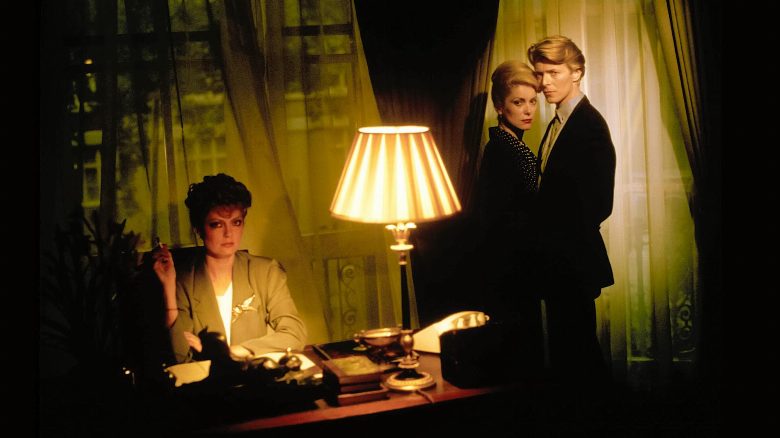
The neon-drenched corridors and cold, sophisticated interiors of Tony Scott’s directorial debut, The Hunger, stand as a definitive aesthetic milestone that forever altered the visual language of vampire cinema. Far removed from the gothic, crumbling castles of traditional folklore, this 1983 production treats immortality not as a romanticized blessing but as a hollow, stylish affliction. At its core, the film explores the terrifying fragility of human connection when one partner is tethered to the infinite and the other is anchored to the inevitable decay of biological time. By casting David Bowie alongside Catherine Deneuve, the film taps into a specific type of mid-eighties cool, where high-fashion sensibilities and synthesized soundscapes create an atmosphere of detached, predatory elegance that feels surprisingly relevant to the modern obsession with youth preservation.
For audiences familiar with the diverse landscapes of global cinema, particularly the burgeoning experimental movements within contemporary Indian film industries, The Hunger offers a masterclass in mood-driven storytelling. It functions less as a conventional horror flick and more as a melancholic character study, prioritizing internal dread over jump scares. The narrative centers on a centuries-old elegant predator who finds her long-term arrangement with her lover unexpectedly crumbling when he begins to wither at an impossible rate. This premise forces a collision between the immortal elite and the clinical world of medical research, represented by Susan Sarandon as a scientist whose curiosity eventually lures her into a dangerous game. It is a film for those who appreciate cinema that values texture, lighting, and performance over linear exposition, echoing the way recent psychological thrillers in the Malayalam and Tamil industries have begun to prioritize atmosphere to ground their supernatural elements.
The film remains a cult favorite precisely because it refuses to conform to the rules of the genre. Its pacing is glacial and deliberate, inviting the viewer to sink into its dark, opulent world rather than rushing toward a climax. Tony Scott, who would later become a titan of high-octane action, here demonstrates a restraint that highlights his ability to craft a singular, haunting mood. It serves as an essential watch for cinephiles who want to see how the vampire trope was deconstructed and reimagined for the MTV generation, stripping away the capes and coffins to reveal a story about the loneliness of being left behind. Whether you are a fan of classic eighties cult cinema or simply interested in how visual style can dictate the emotional weight of a narrative, this piece remains a chilling exploration of what we are willing to sacrifice to stay relevant in a world that is constantly moving on.
Cast(37)